
- US dollars
Public Library 42nd Street
The Belnord
- 20 x 20 undefined
$3,300
US dollars
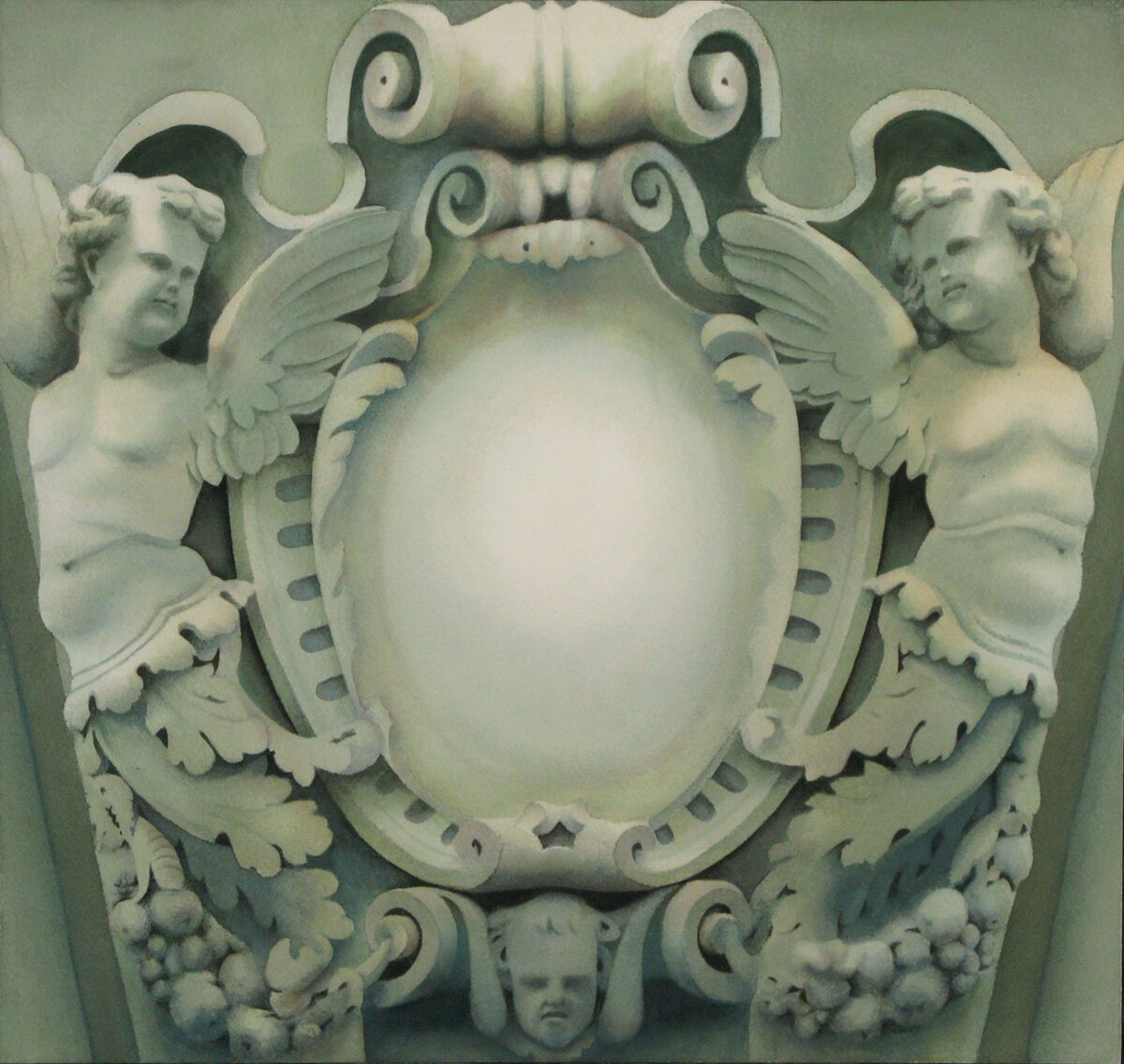
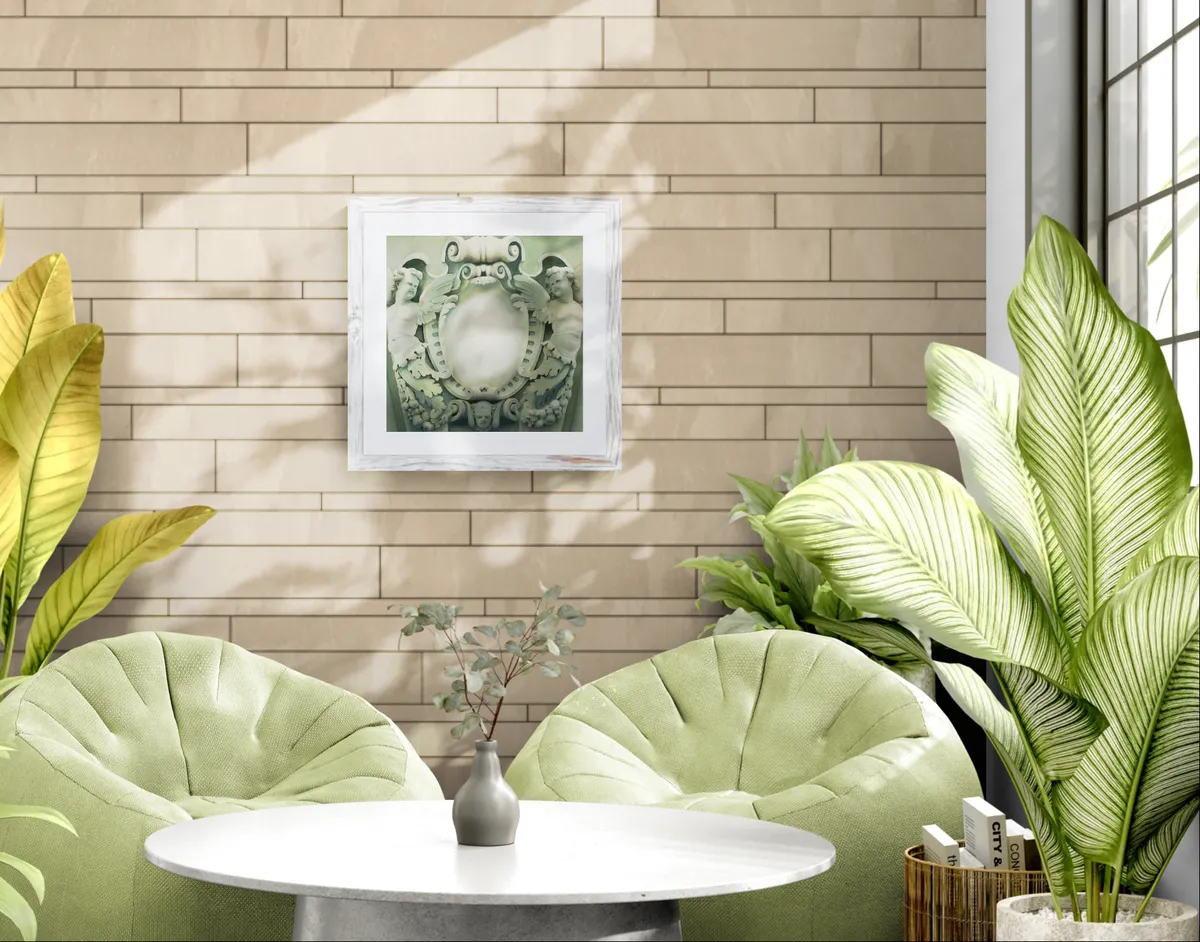
This watercolor focuses on the carved cartouche above one of the entrances of the Belnord at 225 West 86th Street on Manhattan's Upper West Side. Two winged putti flank an oval shield. The shield is blank. The building was designed by Hiss & Weekes for the Belnord Realty Company and completed in 1909 in brick and Indiana limestone, in the Italian Renaissance style. It fills the entire block between 86th and 87th Streets, Broadway and Amsterdam Avenue. Contemporary press called it the largest apartment house in the world: 175 apartments, more than two thousand rooms, and an expected population of over twelve hundred. Its enormous interior courtyard was also the largest of its kind. The painting holds almost everything within a single range of moss green and gray. The deepest values sit in the niches behind the putti and in the small face below the shield. The palest and smoothest passage is the empty oval at the center, where the light collects. A cartouche is made to carry something: a monogram, a date, a coat of arms, a name. This one carries nothing. The Belnord was designed so residents could drive through monumental entrance gates and cross the private courtyard to their doors, removed from the street outside. Above the entrance they passed through, a shield that names no one. * Framing: Framed; frame not shown * Room view: For scale and presentation only
December, 2010
Watercolor painting
Landmark, Building
- US dollars
$3,300
US dollars
US Custom House
- 30 x 22 undefined
- US dollars
$3,800
US dollars
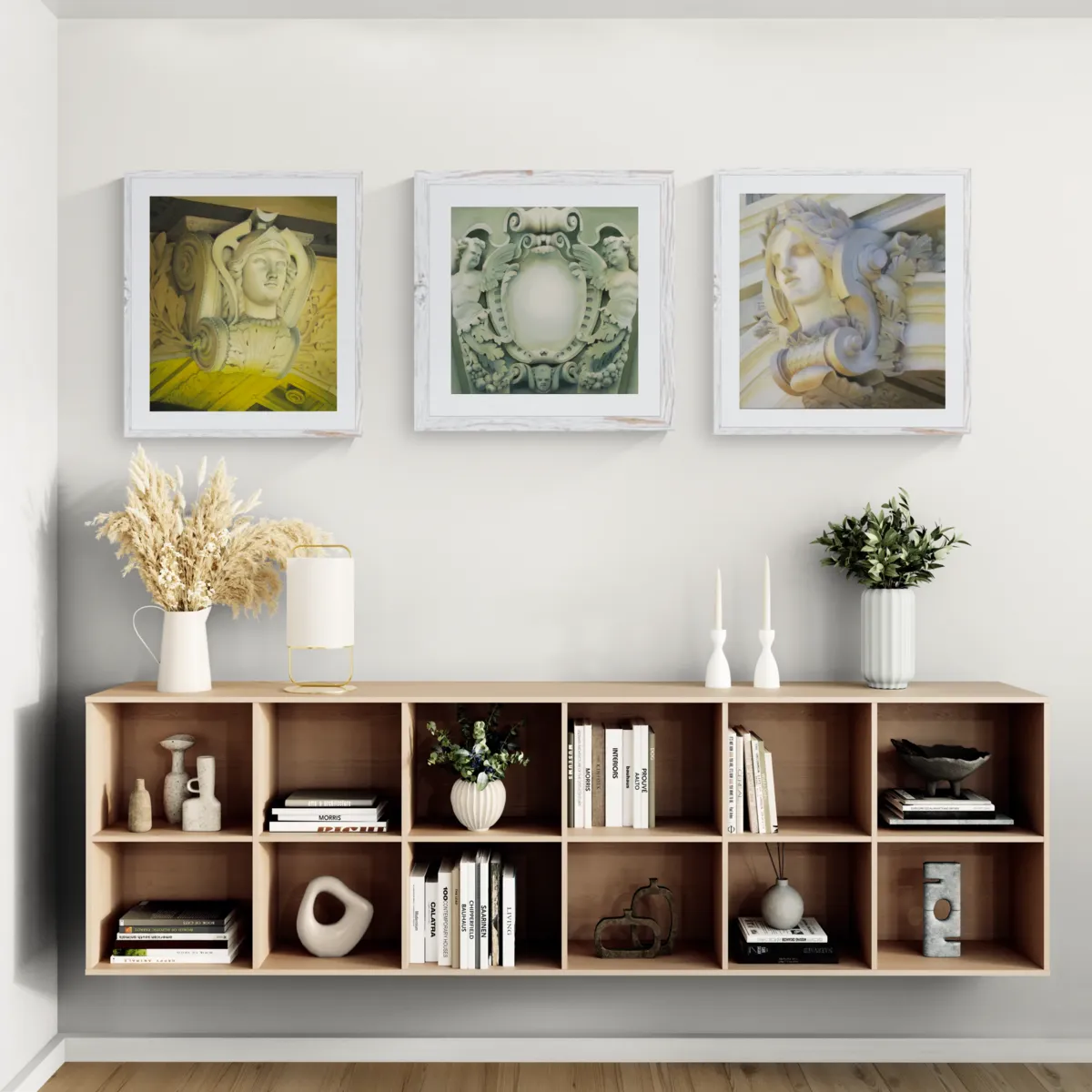
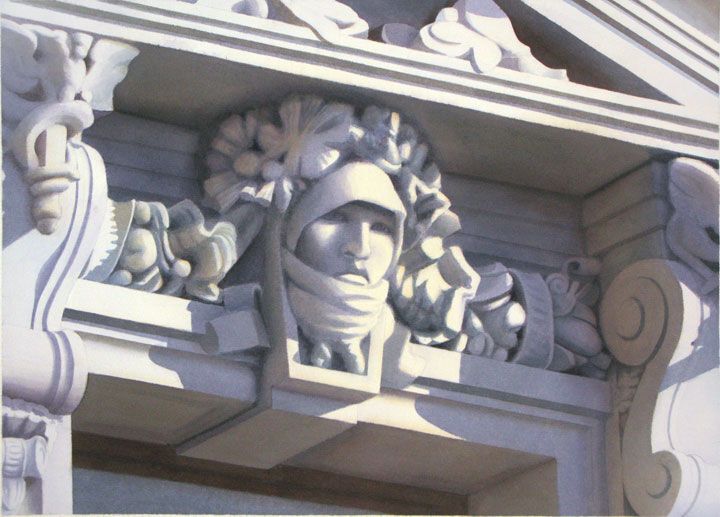
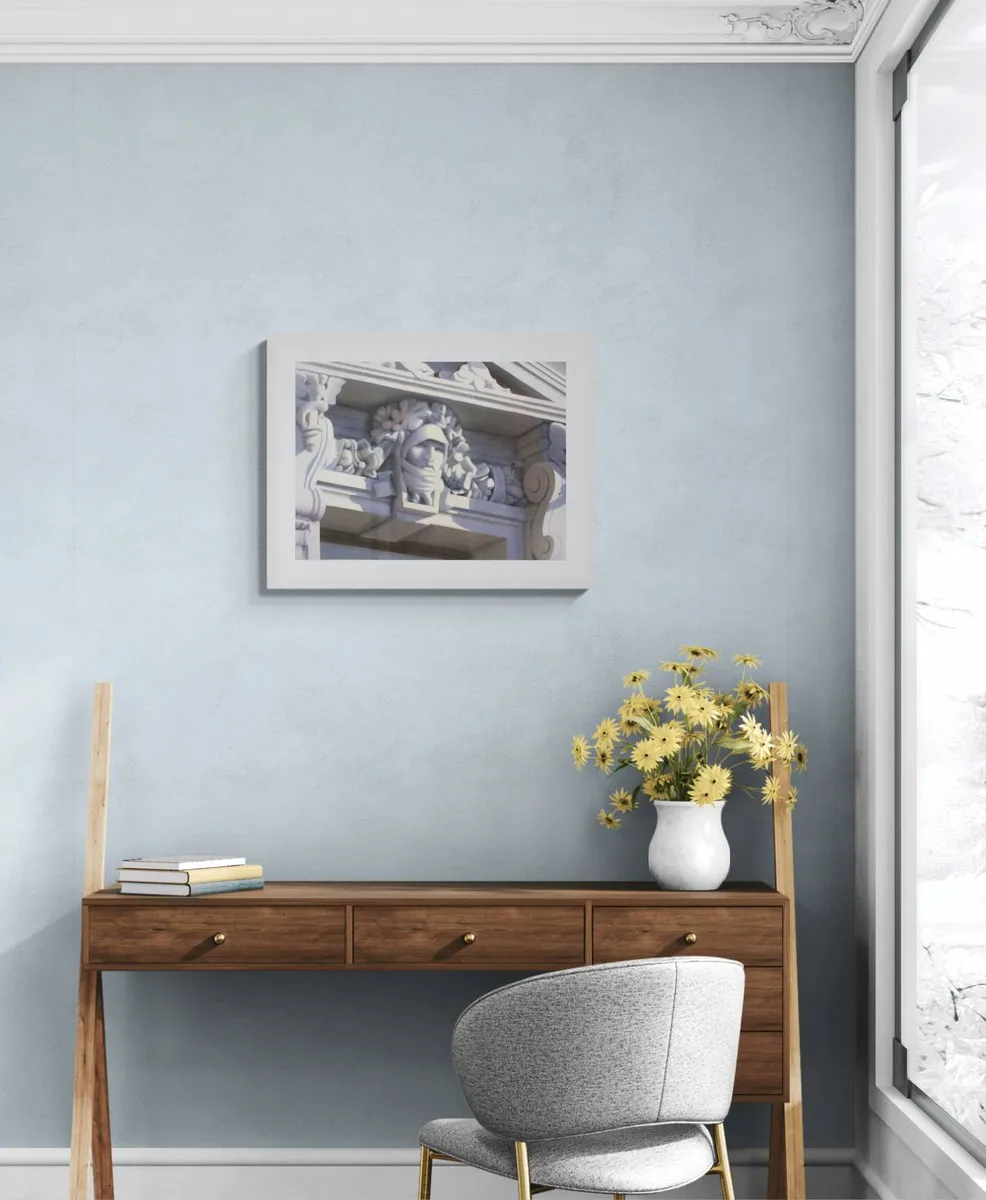
This watercolor, “US Custom House,” focuses on one of the carved heads set above the windows of the Alexander Hamilton U.S. Custom House at Bowling Green in Lower Manhattan. Cass Gilbert designed the building, which rose between 1902 and 1907 as headquarters for the Port of New York's customs operation. Daniel Chester French's four seated continents - America, Asia, Europe and Africa - sit at the entrance. Above the windows of the main facade are eight keystone heads representing what was then described as the “eight races of mankind.” This figure is hooded, the drapery wrapped closely at the throat, and set within a wreath of fruit, shells and feathers beneath a heavy cornice. The painting is worked almost entirely in gray-blue and violet, with warm light catching the upper edges and the cornice above. The deepest shadow falls across the eyes, leaving the face partly concealed. The customs service moved out in the 1970s. Since 1994, the building has housed the Smithsonian's National Museum of the American Indian. The eight heads remain above the windows. This is the first of several paintings from this building. * Framing: Framed; frame not shown * Room view: For scale and presentation only
July, 2008
Watercolor painting
Effigy, Face, Building, Architecture
- US dollars
$3,800
US dollars
Public Library 42nd Street
- 25 x 48 in
- US dollars
$5,000
US dollars
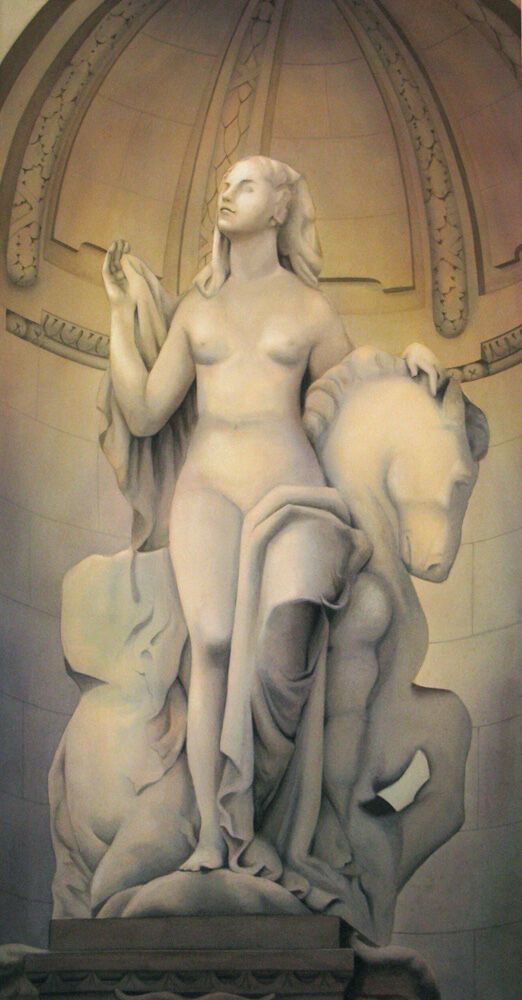
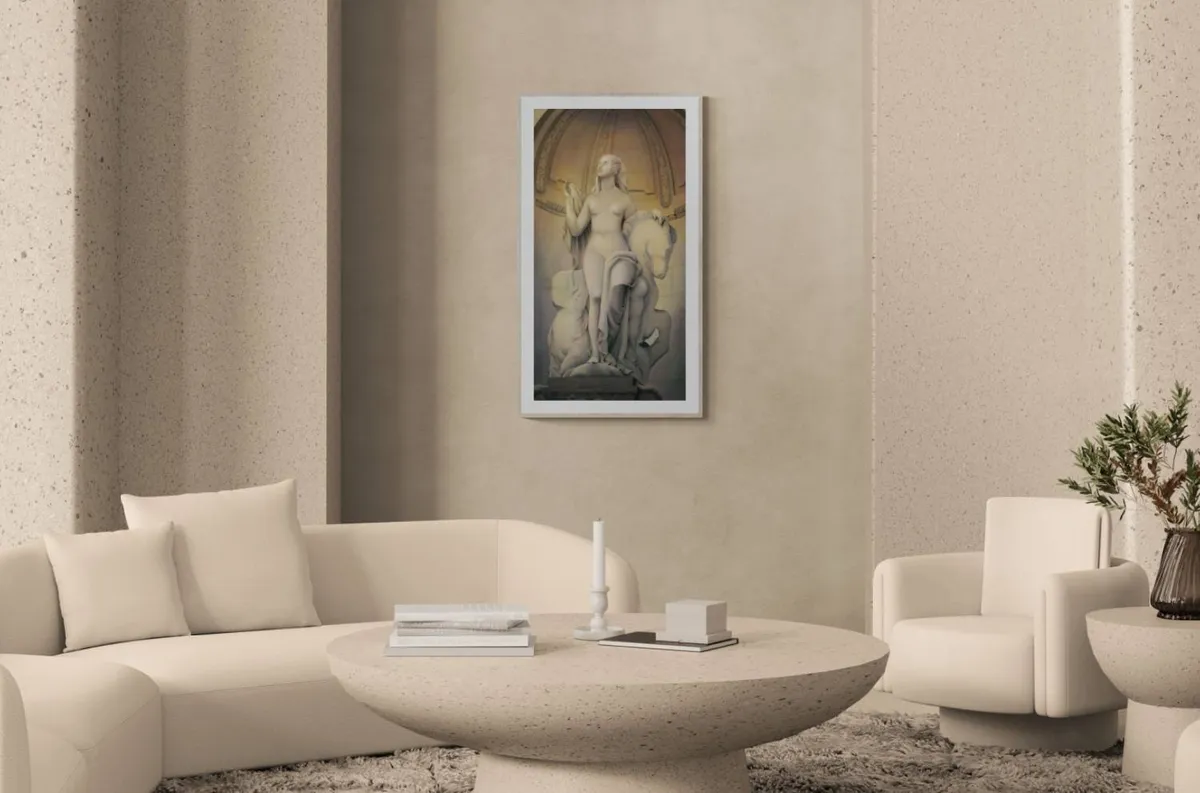
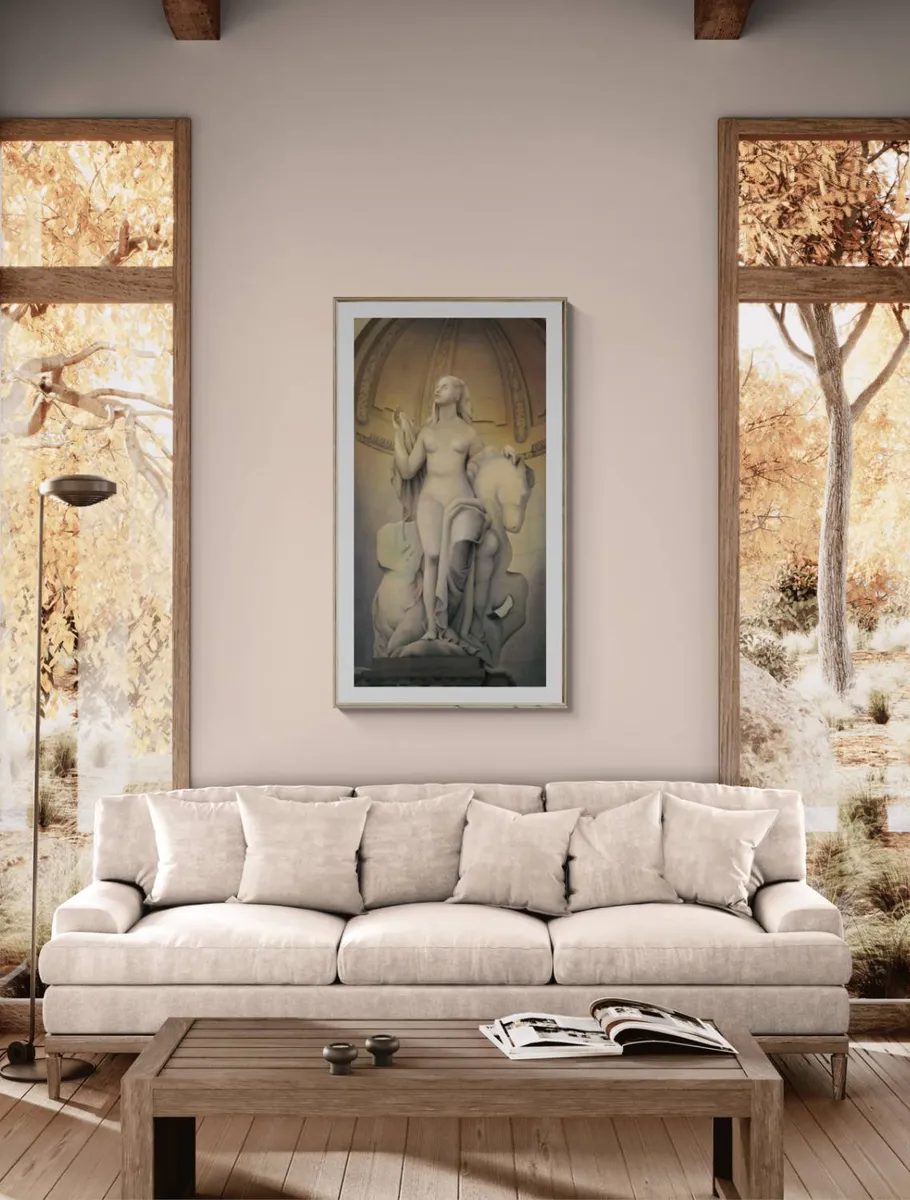
This watercolor focuses on Beauty, the marble figure above the south fountain on the Fifth Avenue facade of the New York Public Library, to the left of the main entrance. The library was designed by Carrère & Hastings and opened in 1911 on the site of the former Croton Reservoir. Frederick MacMonnies was commissioned to create the two allegorical figures flanking the entrance: Truth to the north, seated with a sphinx, and Beauty to the south, accompanied by Pegasus. Both were carved in Carrara marble and placed above terraced basins of Vermont marble. Beauty stands within a shallow niche, Pegasus at her shoulder, one arm raised and drapery falling from her hip. The painting runs warm through the upper half, with ochre and cream across the niche and raised arm, then gradually cools into gray and violet toward the base. Her face remains the palest passage in the composition, which quietly draws the eye upward. Carved above the figure is a line from John Greenleaf Whittier: "Beauty, old yet ever new, eternal voice and inward word." * Framing: Framed; frame not shown * Room view: For scale and presentation only
September, 2008
Watercolor painting
Figure, Landmark, Effigy, NYC, Public Library
- US dollars
$5,000
US dollars