
- US dollars
Peninsula Hotel II
US Custom House
- 30 x 22 undefined
$3,800
US dollars
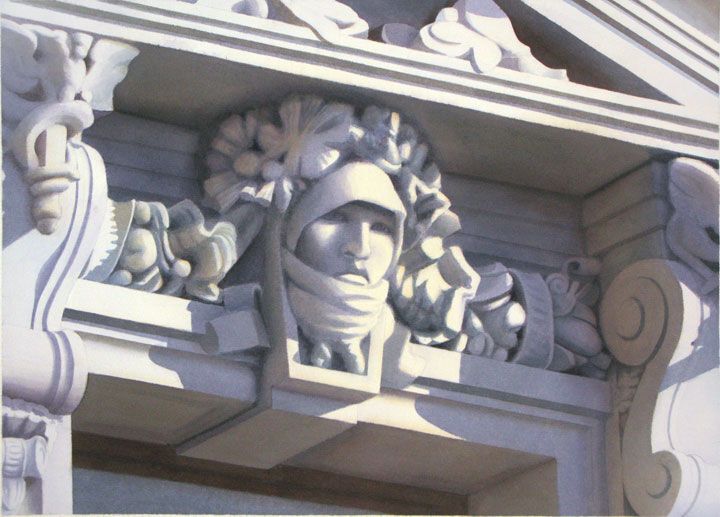
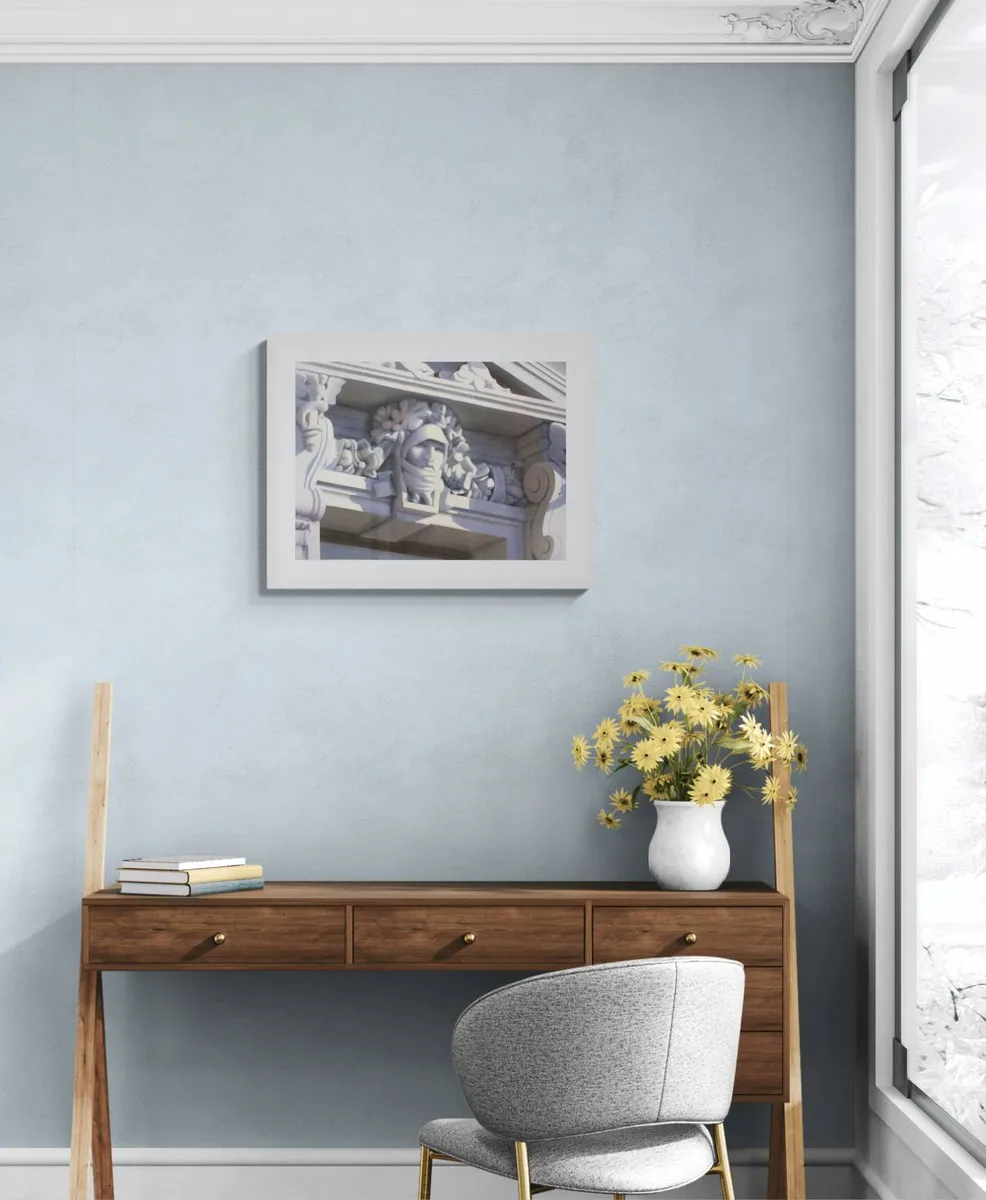
This watercolor, “US Custom House,” focuses on one of the carved heads set above the windows of the Alexander Hamilton U.S. Custom House at Bowling Green in Lower Manhattan. Cass Gilbert designed the building, which rose between 1902 and 1907 as headquarters for the Port of New York's customs operation. Daniel Chester French's four seated continents - America, Asia, Europe and Africa - sit at the entrance. Above the windows of the main facade are eight keystone heads representing what was then described as the “eight races of mankind.” This figure is hooded, the drapery wrapped closely at the throat, and set within a wreath of fruit, shells and feathers beneath a heavy cornice. The painting is worked almost entirely in gray-blue and violet, with warm light catching the upper edges and the cornice above. The deepest shadow falls across the eyes, leaving the face partly concealed. The customs service moved out in the 1970s. Since 1994, the building has housed the Smithsonian's National Museum of the American Indian. The eight heads remain above the windows. This is the first of several paintings from this building. * Framing: Framed; frame not shown * Room view: For scale and presentation only
July, 2008
Watercolor painting
Effigy, Face, Building, Architecture
- US dollars
$3,800
US dollars
Passing Patsys
- 19 x 13 undefined
- US dollars
$2,500
US dollars
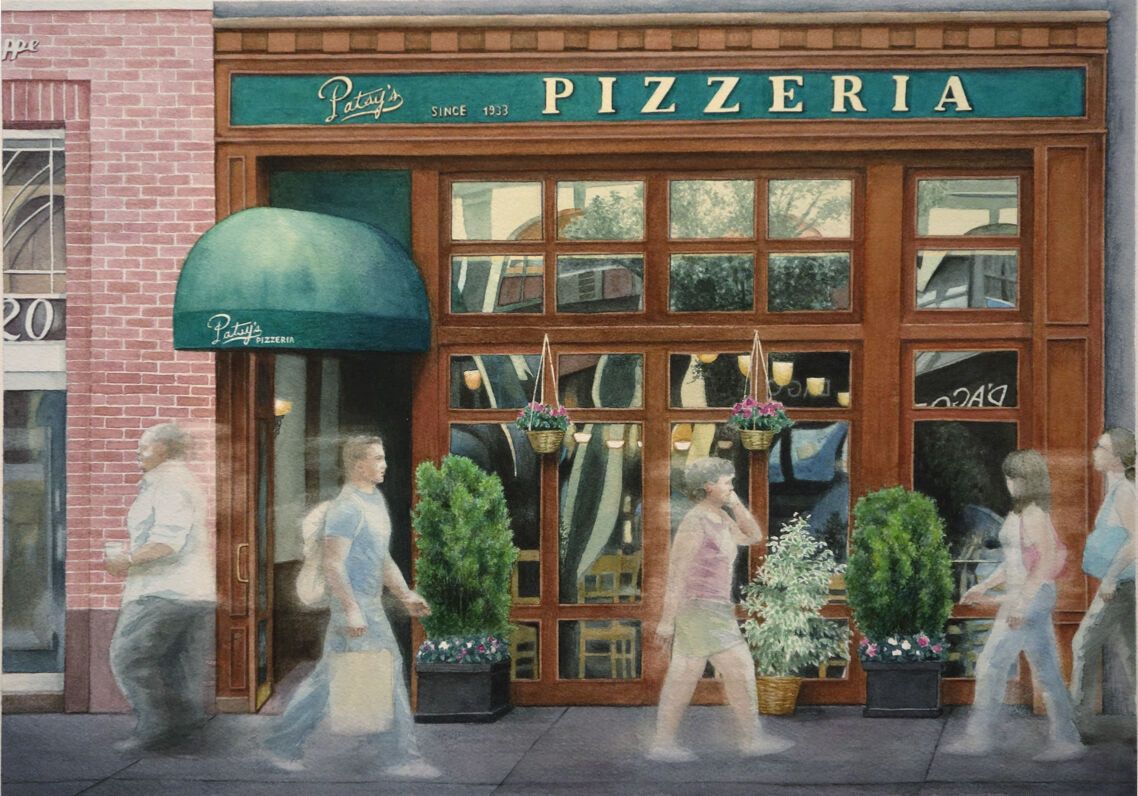
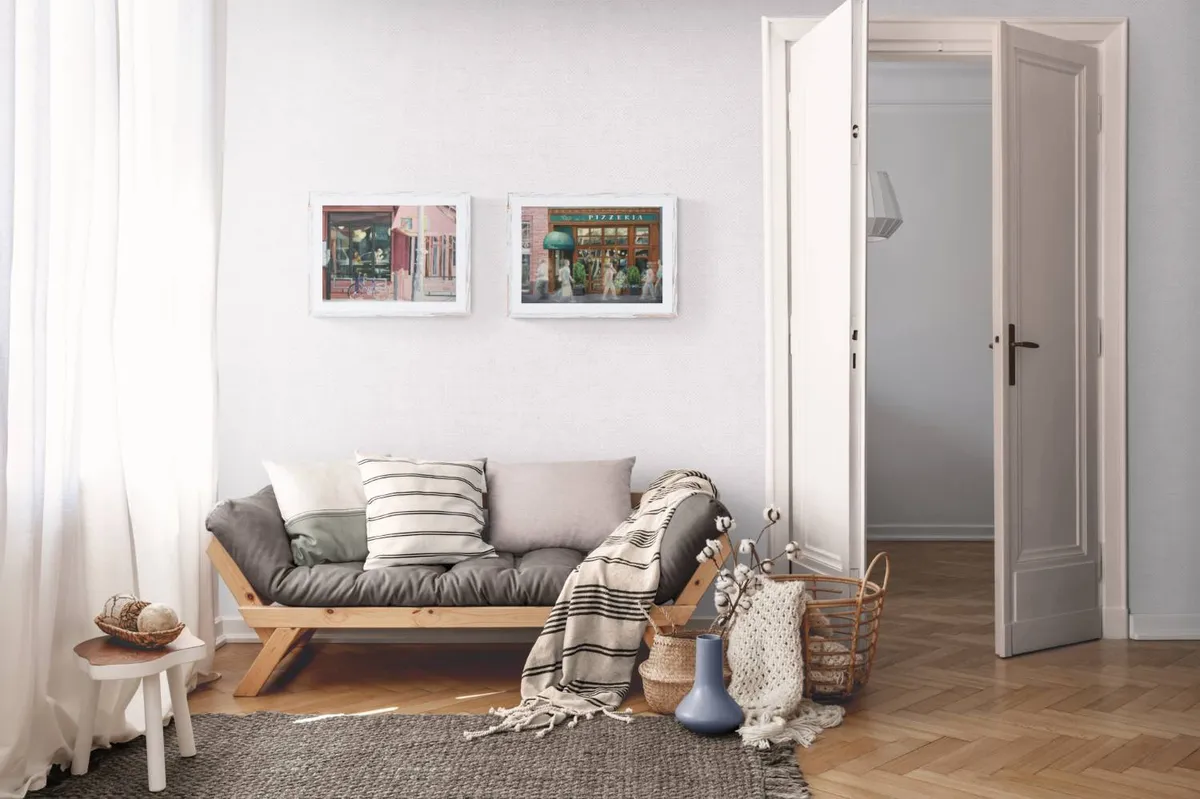
Introducing "Passing Patsy's," a striking 20 x 16-inch watercolor painting that captures the enduring charm of Patsy's Pizzeria, a family-owned New York establishment celebrated for its authentic Sicilian coal oven-pizza. This artwork uniquely portrays the glass facade of Patsy's, reflecting the bustling New York City street scene, where people move quickly past the pizzeria that stands as a testament to a fading era of family-run businesses. Founded in 1933 by Pasquale Lancieri, Patsy's Pizzeria has become a cherished spot for pizza lovers, upheld by generations of the Lancieri family. In a city where small, family-owned businesses are increasingly rare, Patsy's remains a beacon of tradition and community amidst the fast-paced urban changes. In "Passing Patsy's," the artist skillfully uses a blurred effect to capture the motion of people walking by, contrasting sharply with the steady, unchanging presence of the pizzeria. Inside Patsy's, the lights shine warmly, illuminating scenes of families and friends enjoying their time together, visible through the glass that also mirrors the buildings across the street. This painting beautifully illustrates the contrast between the dynamic, ever-moving city life and the enduring, unchanged nature of Patsy's. The interplay of reflections, light, and color not only captures the lively atmosphere but also tells a story of a place that has withstood the test of time, representing a dwindling yet beloved facet of New York's cultural landscape. "Passing Patsy's" is perfect for anyone who appreciates the blend of history, family heritage, and modern city life. This piece offers a glimpse into the heart of New York, where the past and present meet, beautifully rendered in watercolor. Add this captivating painting to your collection to celebrate the enduring spirit of New York and the timeless appeal of one of its most cherished family-owned pizzerias. * Framing: Framed; frame not shown * Room view: For scale and presentation only
December, 2004
Watercolor painting
Store front, NY Street Scene
- US dollars
$2,500
US dollars
Peninsula Hotel II
- 22 x 31 undefined
- US dollars
$3,800
US dollars
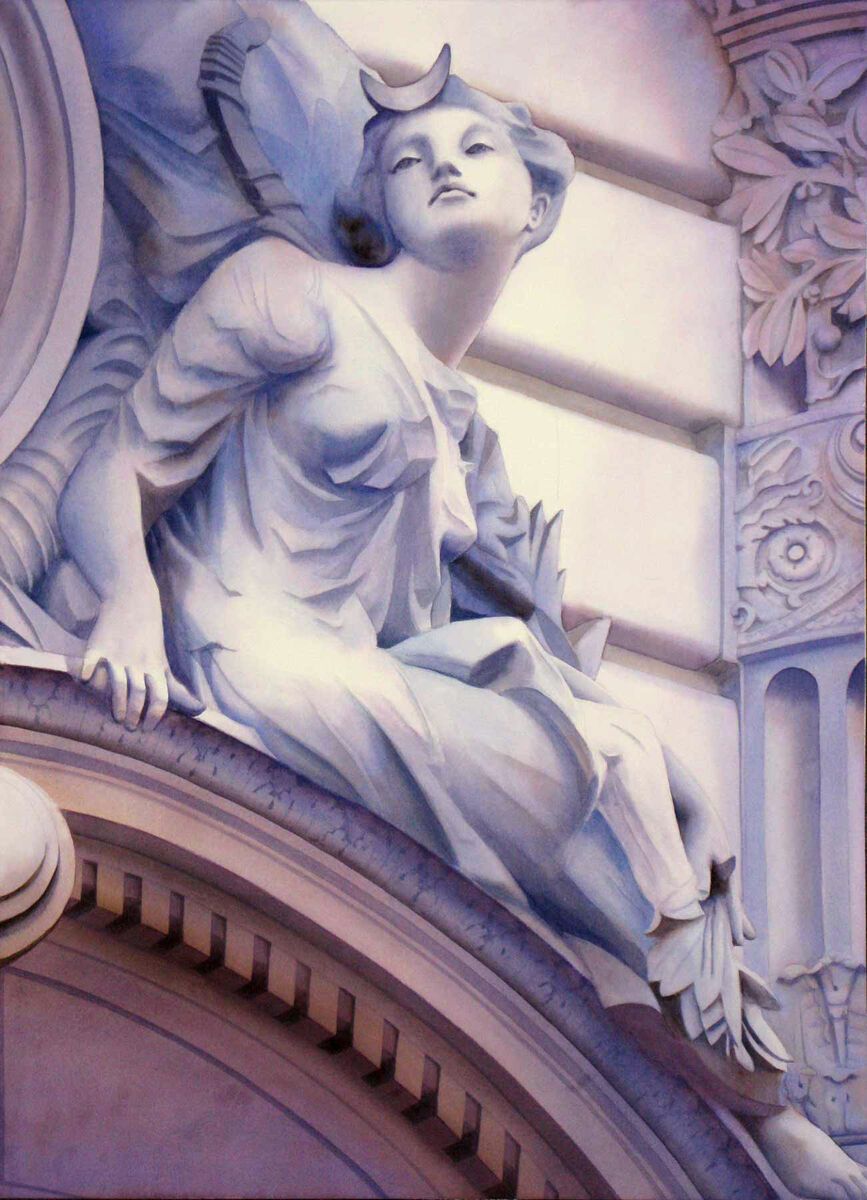
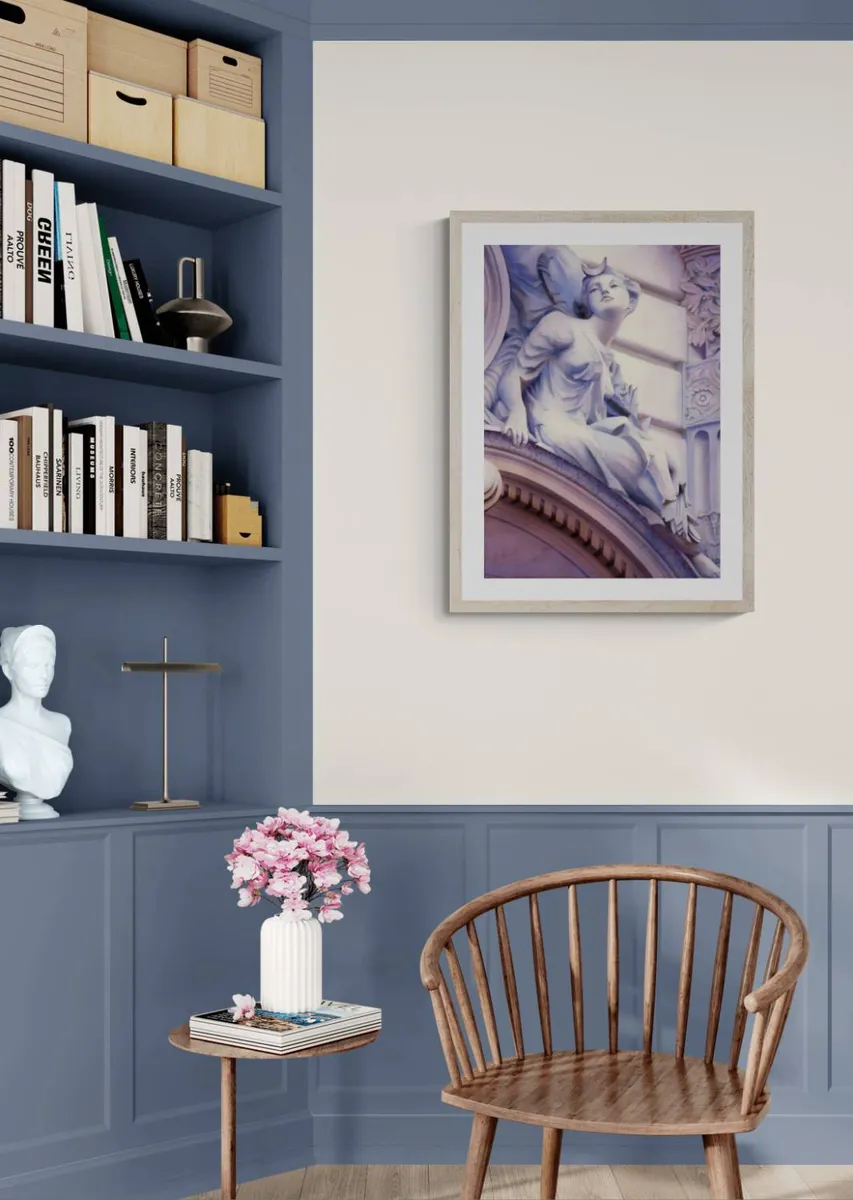
This watercolor, “Peninsula Hotel II,” focuses on Diana, one of the two sculpted figures flanking the bull's-eye window above the main entrance of the Peninsula Hotel on West 55th Street in New York City. She is identified by the crescent moon at her brow. The building was erected between 1902 and 1905 by the Fifty-Fifth Street Company and opened as the Hotel Gotham, at a cost of $2.25 million. It rose at a moment when Fifth Avenue was shifting from a street of private mansions into a commercial thoroughfare, competing directly with the St. Regis across the avenue. The painting emphasizes the upward angle from the street below. Diana twists at the waist, one hand braced behind her on the cornice, her head turned up and away. The cropping is close. From the street she is a pale shape against the wall. Here she fills the frame, holding a pose she has held since 1905. Lavender and cool gray carry most of the painting, while warmer pinks at the shoulder and drapery shift the weight and hold the composition steady. “Peninsula Hotel II” was featured in American Watercolor Magazine. Diana and Ceres were each painted alone before being brought together around the circular window in “Peninsula Hotel III.” * Framing: Framed; frame not shown * Room view: For scale and presentation only
June, 2008
Watercolor painting
Figure, Effigy, Landmark
- US dollars
$3,800
US dollars