
- US dollars
the University Club of NY
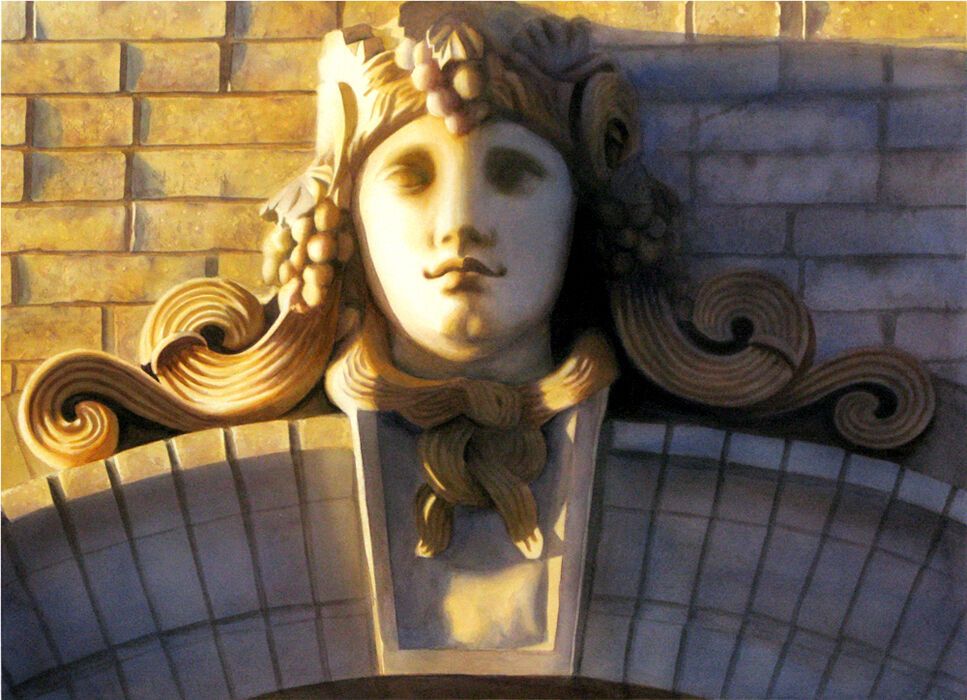
Sunset on 57th Street
- 28 x 21 undefined
$3,800
US dollars
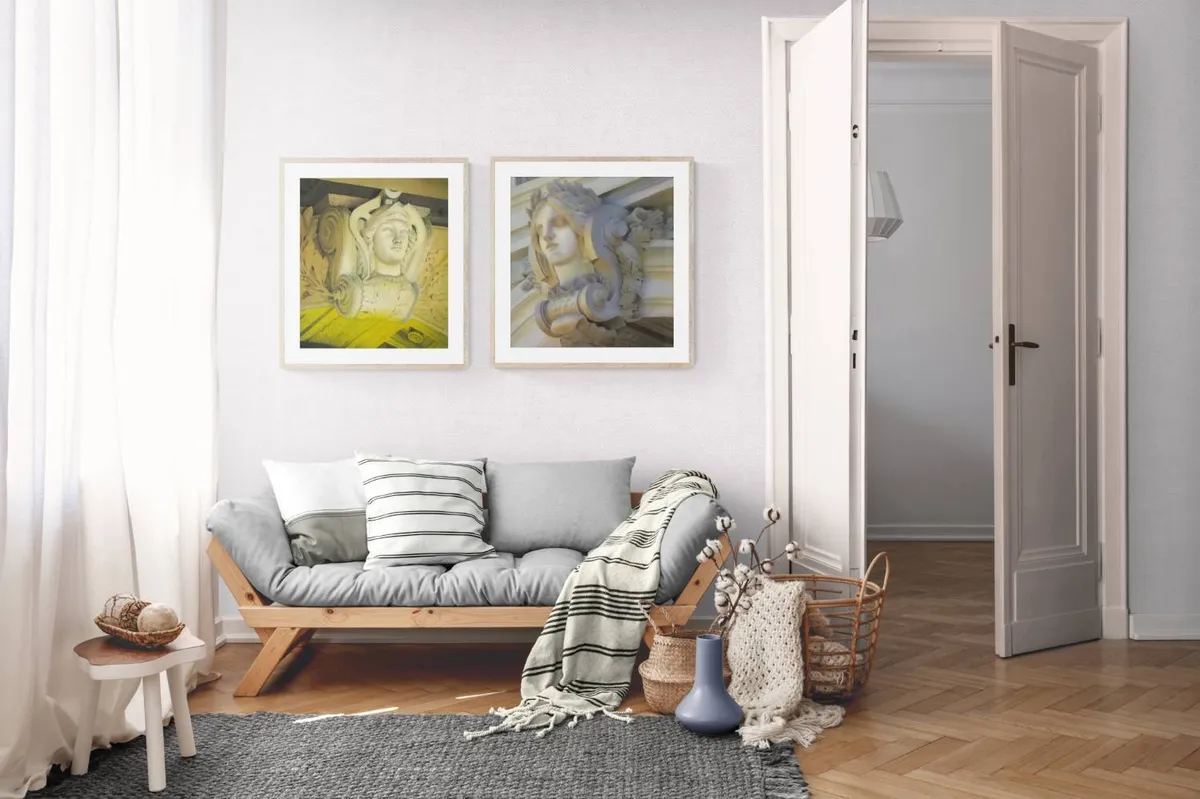
“Sunset on 57th Street” looks up at a terracotta head above a window at 163–165 West 57th Street, a face crowned with grape clusters and vine leaves. The building was raised in 1916 for Louis Chalif, a ballet dancer from Odessa who arrived in New York in 1904 and opened his school the following year, directly across from Carnegie Hall. He called the building his temple to Terpsichore. His architects, George and Henry Boehm, covered the facade in polychrome terracotta and filled it with imagery of the theater: masks, lyres, faces, griffins, urns. The grapes and vine leaves belong to Bacchus, whose followers danced. 57th Street runs east to west, and late in the day the sun comes straight down it. The painting is split by that light. The brick on the left burns gold; on the right it falls into blue-purple shadow. The face is caught at the divide, warm on one side and cool on the other. A trade magazine wrote in 1916 that the new building had "a golden charm that is all its own." A century of owners later, the terracotta is barely altered, and on a clear evening the phrase still describes it exactly. * Framing: Framed; frame not shown * Room view: For scale and presentation only
August, 2008
Watercolor painting
Face, Effigy, Landmark
- US dollars
$3,800
US dollars
69 8th St.
- 28 x 21 undefined
- US dollars
$3,800
US dollars
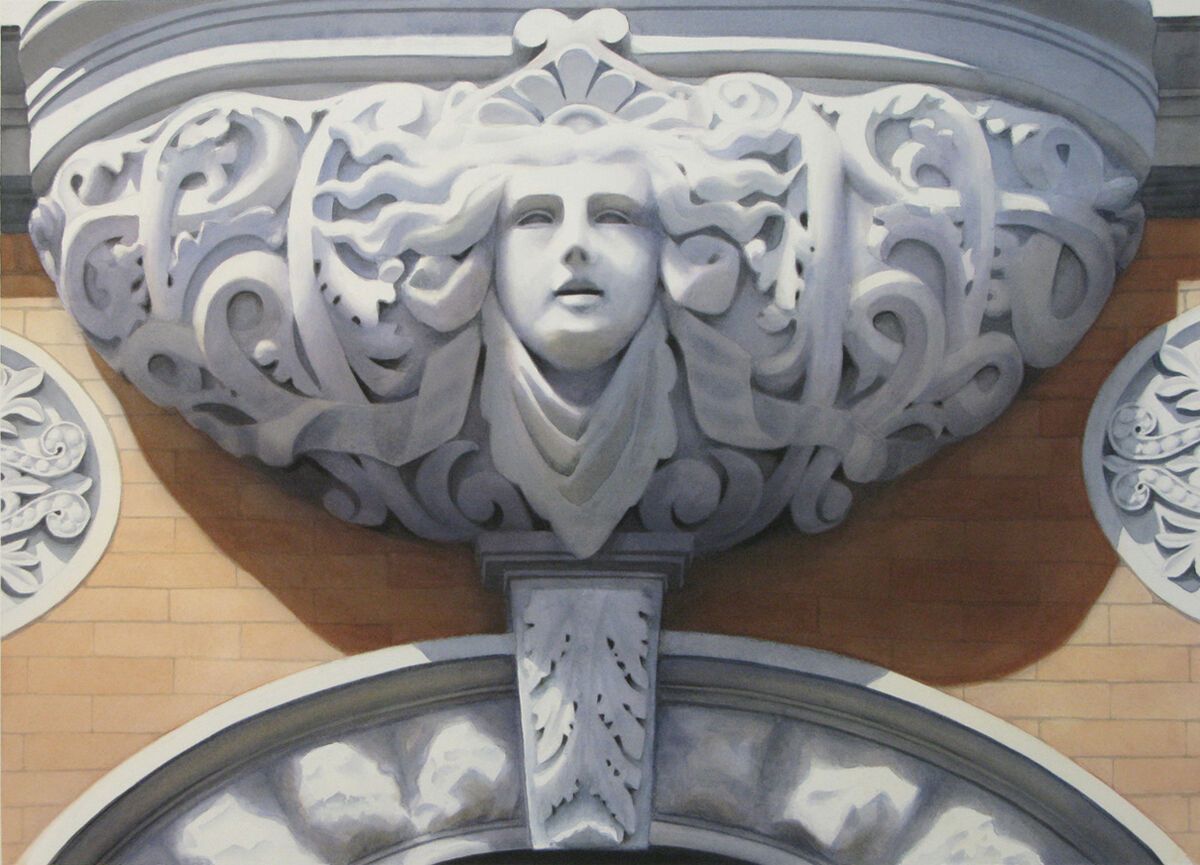
This watercolor focuses on the carved face at the center of the fourth-floor balcony of the German Odd Fellows Hall at 69 St. Marks Place in New York's East Village. The face emerges from an elaborate mass of foliage that reads almost equally as hair, becoming the still center of the surrounding curves and ornament. Strong summer light falls almost directly across the facade, separating the pale carving from the warm ochre brick through sharp shifts of value. Gray and lavender move through the stone, while the deep, warm shadow beneath the balcony emphasizes its weight and projection from the wall. The German Odd Fellows Hall was built in 1889-90, when the East Village was the heart of Kleindeutschland, or Little Germany. Its richly carved facade reflects the craftsmanship brought to the neighborhood by its German immigrant community. Unlike much of New York's architectural ornament of the period, which could be molded and reproduced, the stonework here was carved from one massive block by hand. * Framing: Framed; frame not shown * Room view: For scale and presentation only
December, 2009
Watercolor painting
Face, Effigy, Building
- US dollars
$3,800
US dollars
the University Club of NY
- 20 x 20 undefined
- US dollars
$3,300
US dollars
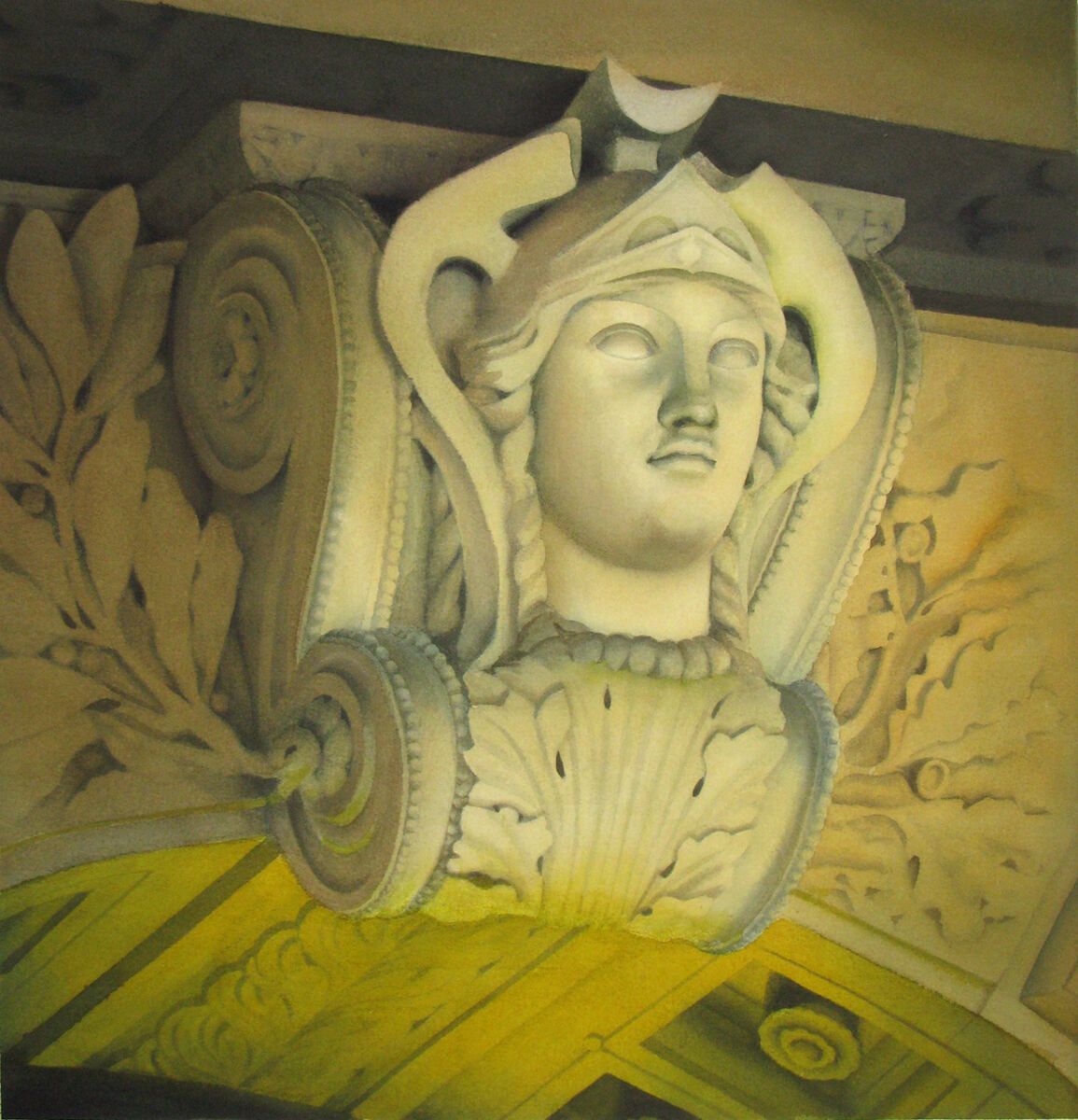
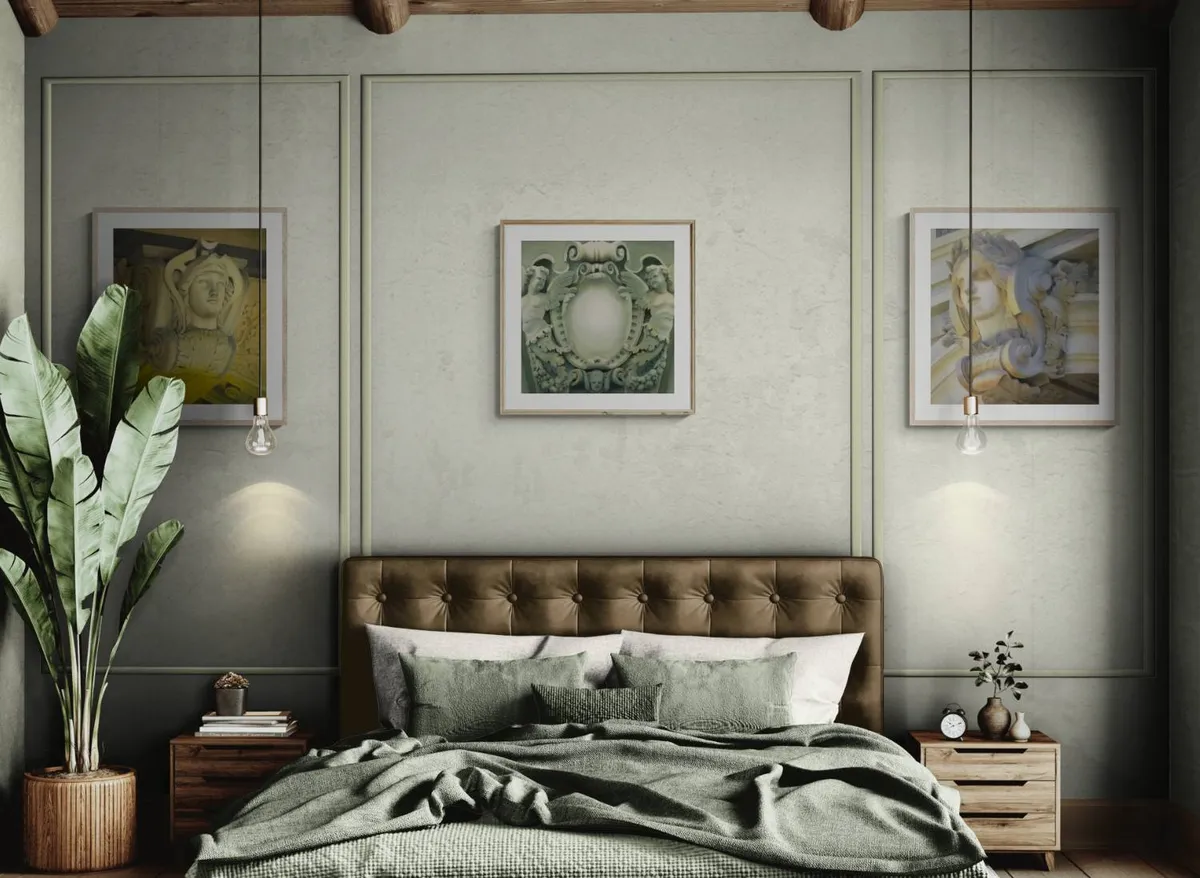
This watercolor focuses on the carved head of Pallas above the main entrance of the University Club at 1 West 54th Street in Midtown Manhattan. Set within an elaborate arrangement of scrolls, foliage, and classical ornament, her pale face emerges from the architecture under the warm light of night. The University Club was designed by Charles Follen McKim of McKim, Mead & White and completed in 1899, an Italian Renaissance palazzo modeled on the Strozzi Palace in Florence. McKim clad it in pink granite instead of the expected white marble, and composed the facade so the building reads from the street as three grand horizontal levels. The seals of eighteen universities are carved across the facade. All three partners of the firm were members of the club, designing their own clubhouse. The painting is built around a restrained contrast of warm gold and cool gray-green. The light rises from below, from the entrance beneath: the chin, throat, and leaves below the face hold the brightest passages, while the brow and upper eye sockets drop into shadow. The close cropping removes almost all sense of the building's monumental scale, leaving Pallas suspended within the curves and foliage around her. A goddess of wisdom, set above the entrance to a club chartered in 1865 for the promotion of literature and art. * Framing: Framed; frame not shown * Room view: For scale and presentation only
February, 2011
Watercolor painting
Effigy, Landmark
- US dollars
$3,300
US dollars