- US dollars
The Belnord
69 8th St.
- 28 x 21 undefined
$3,800
US dollars
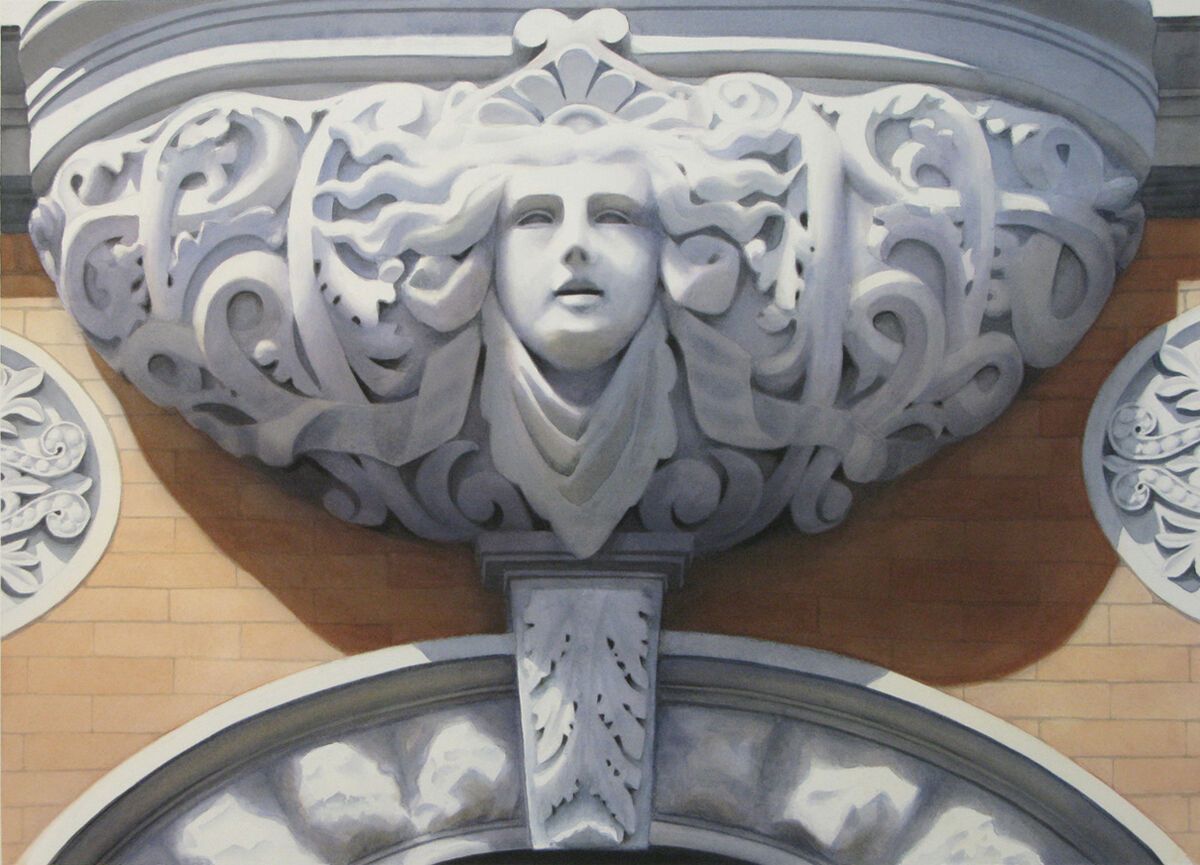
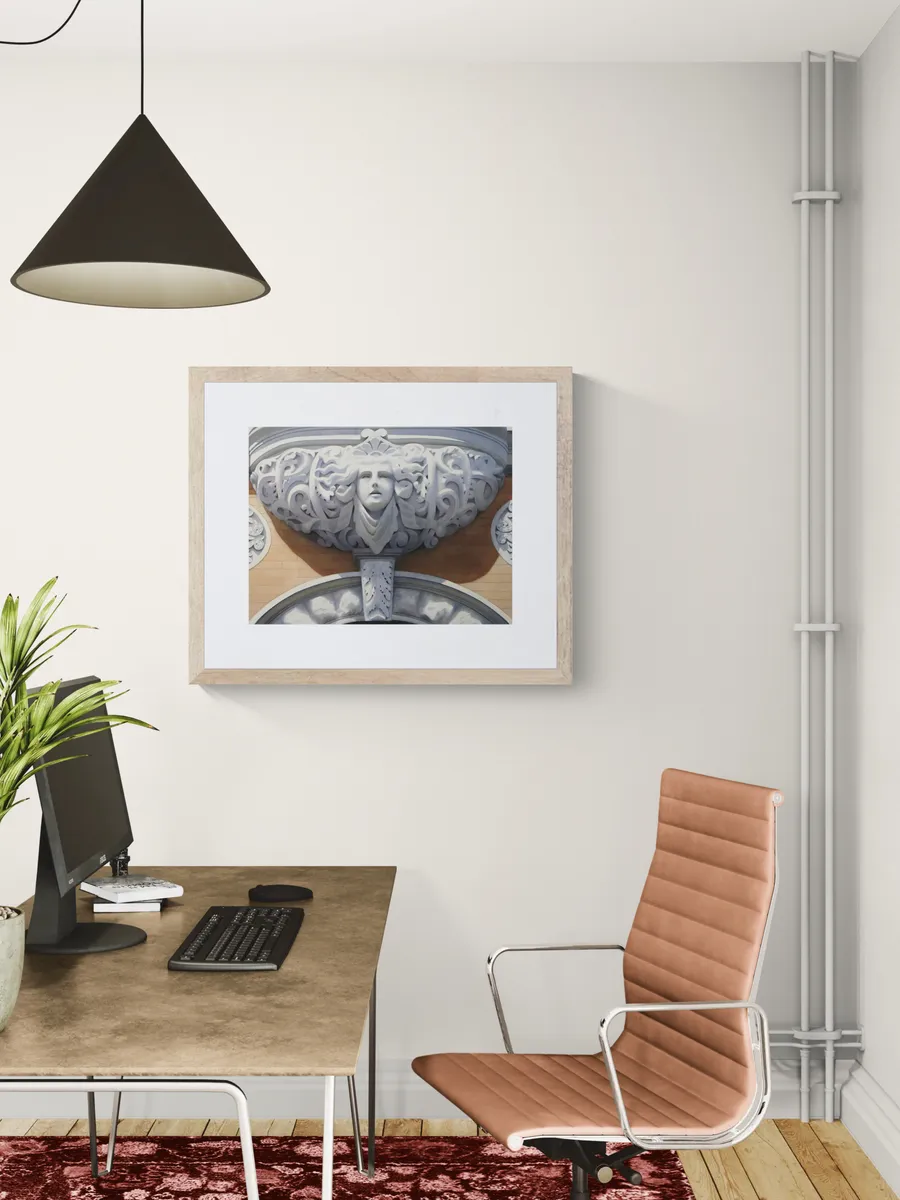
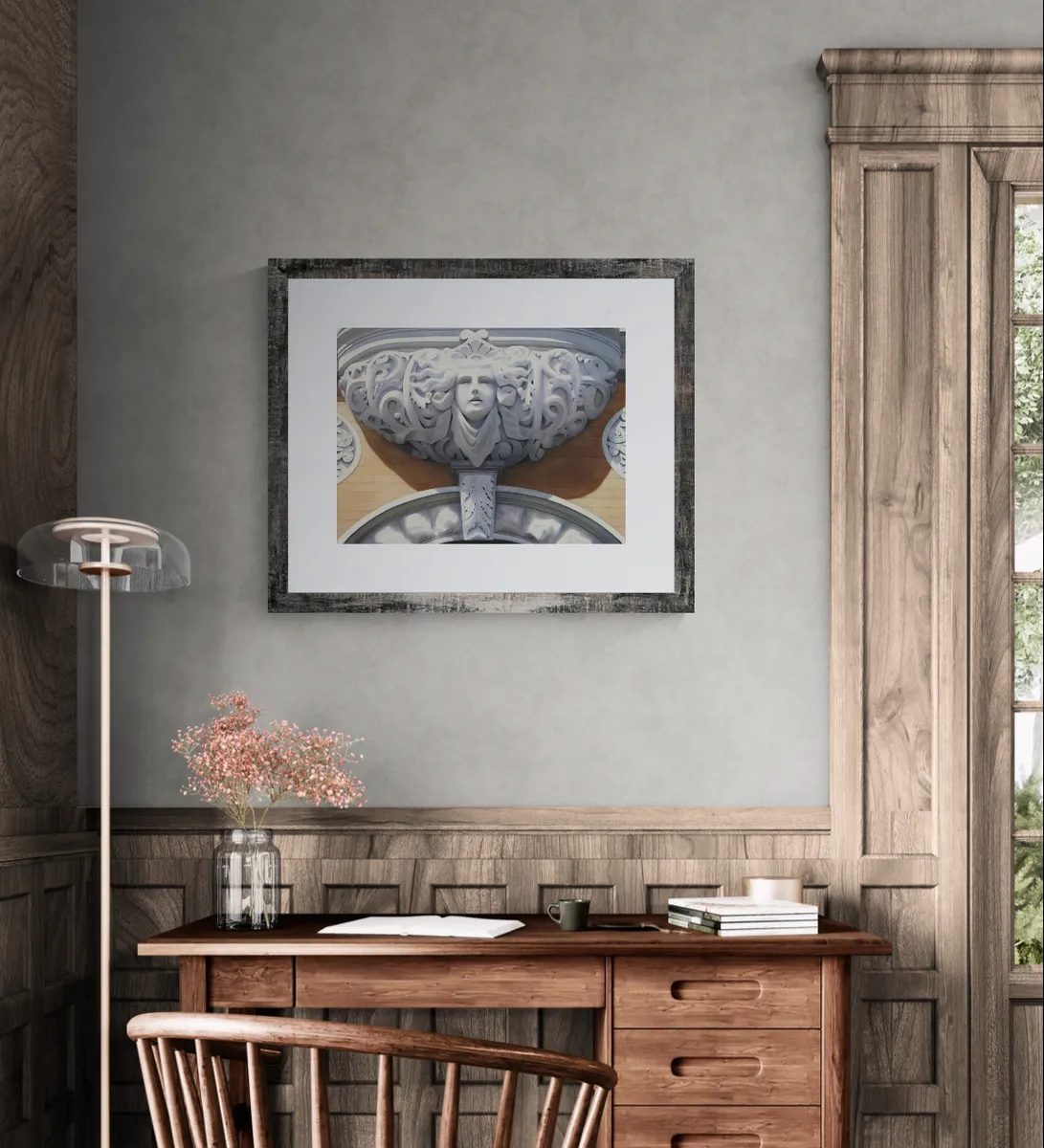
This watercolor focuses on the carved face at the center of the fourth-floor balcony of the German Odd Fellows Hall at 69 St. Marks Place in New York's East Village. The face emerges from an elaborate mass of foliage that reads almost equally as hair, becoming the still center of the surrounding curves and ornament. Strong summer light falls almost directly across the facade, separating the pale carving from the warm ochre brick through sharp shifts of value. Gray and lavender move through the stone, while the deep, warm shadow beneath the balcony emphasizes its weight and projection from the wall. The German Odd Fellows Hall was built in 1889-90, when the East Village was the heart of Kleindeutschland, or Little Germany. Its richly carved facade reflects the craftsmanship brought to the neighborhood by its German immigrant community. Unlike much of New York's architectural ornament of the period, which could be molded and reproduced, the stonework here was carved from one massive block by hand. * Framing: Framed; frame not shown * Room view: For scale and presentation only
December, 2009
Watercolor painting
Face, Effigy, Building
- US dollars
$3,800
US dollars
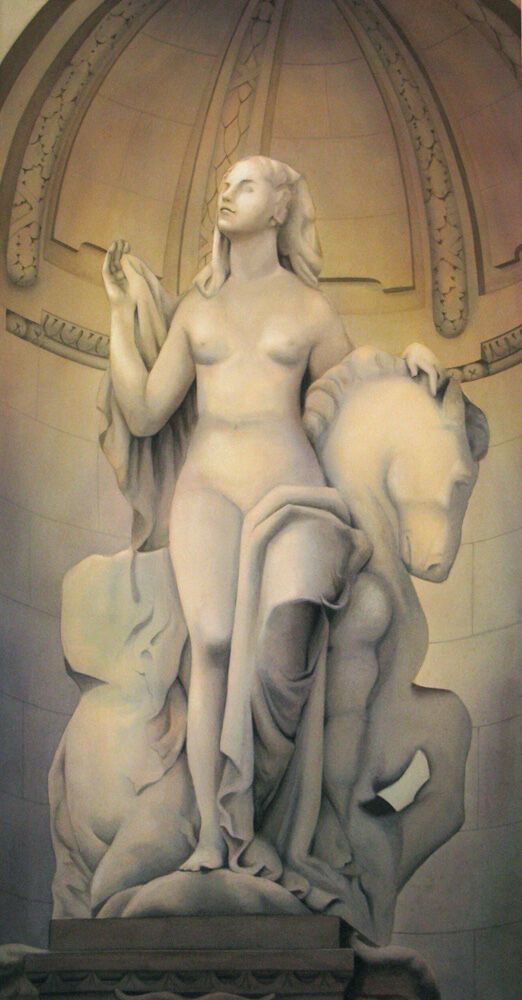
Public Library 42nd Street
- 25 x 48 in
- US dollars
$5,000
US dollars
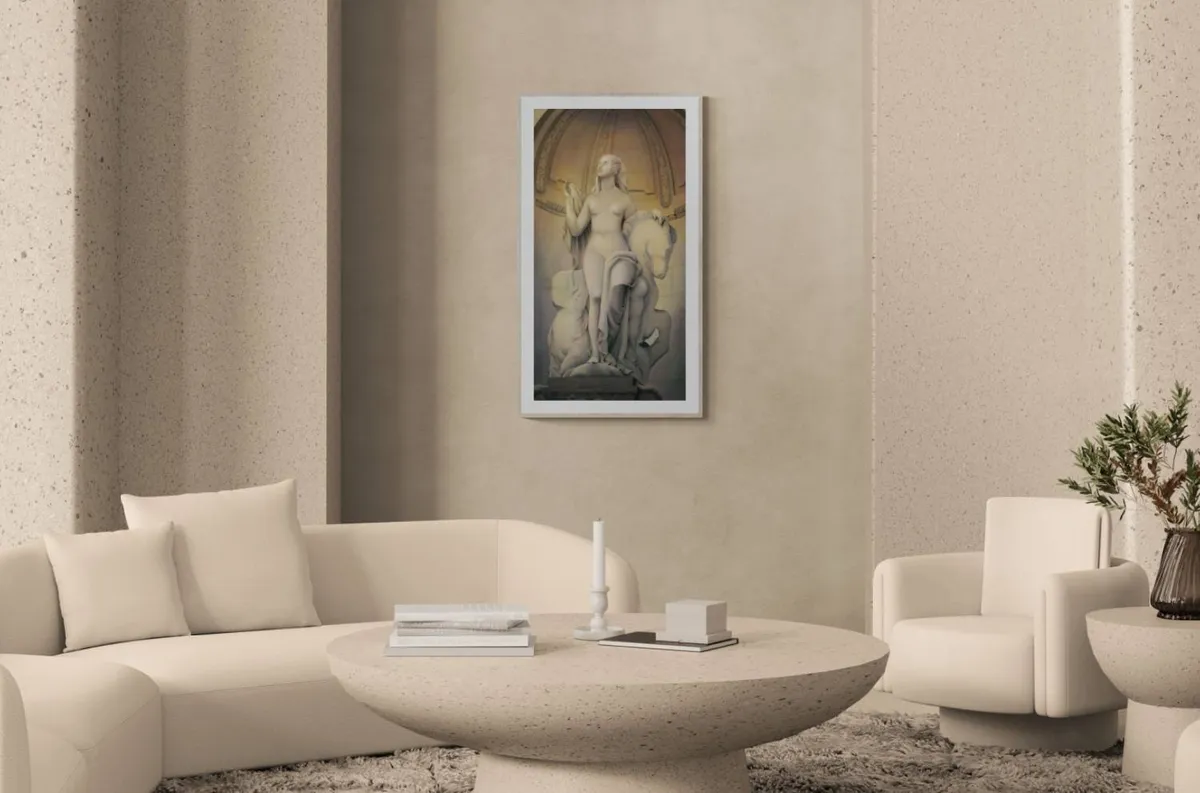
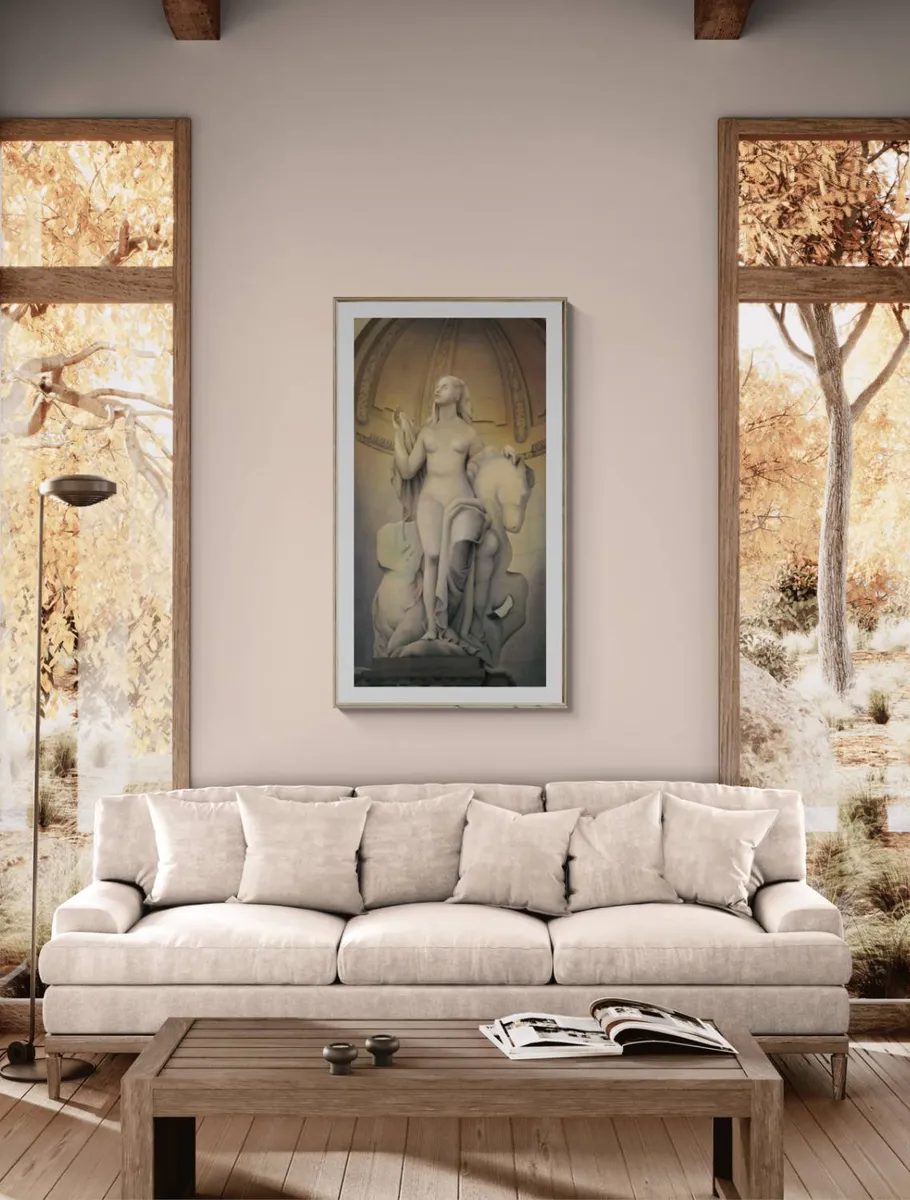
This watercolor focuses on Beauty, the marble figure above the south fountain on the Fifth Avenue facade of the New York Public Library, to the left of the main entrance. The library was designed by Carrère & Hastings and opened in 1911 on the site of the former Croton Reservoir. Frederick MacMonnies was commissioned to create the two allegorical figures flanking the entrance: Truth to the north, seated with a sphinx, and Beauty to the south, accompanied by Pegasus. Both were carved in Carrara marble and placed above terraced basins of Vermont marble. Beauty stands within a shallow niche, Pegasus at her shoulder, one arm raised and drapery falling from her hip. The painting runs warm through the upper half, with ochre and cream across the niche and raised arm, then gradually cools into gray and violet toward the base. Her face remains the palest passage in the composition, which quietly draws the eye upward. Carved above the figure is a line from John Greenleaf Whittier: "Beauty, old yet ever new, eternal voice and inward word." * Framing: Framed; frame not shown * Room view: For scale and presentation only
September, 2008
Watercolor painting
Figure, Landmark, Effigy, NYC, Public Library
- US dollars
$5,000
US dollars
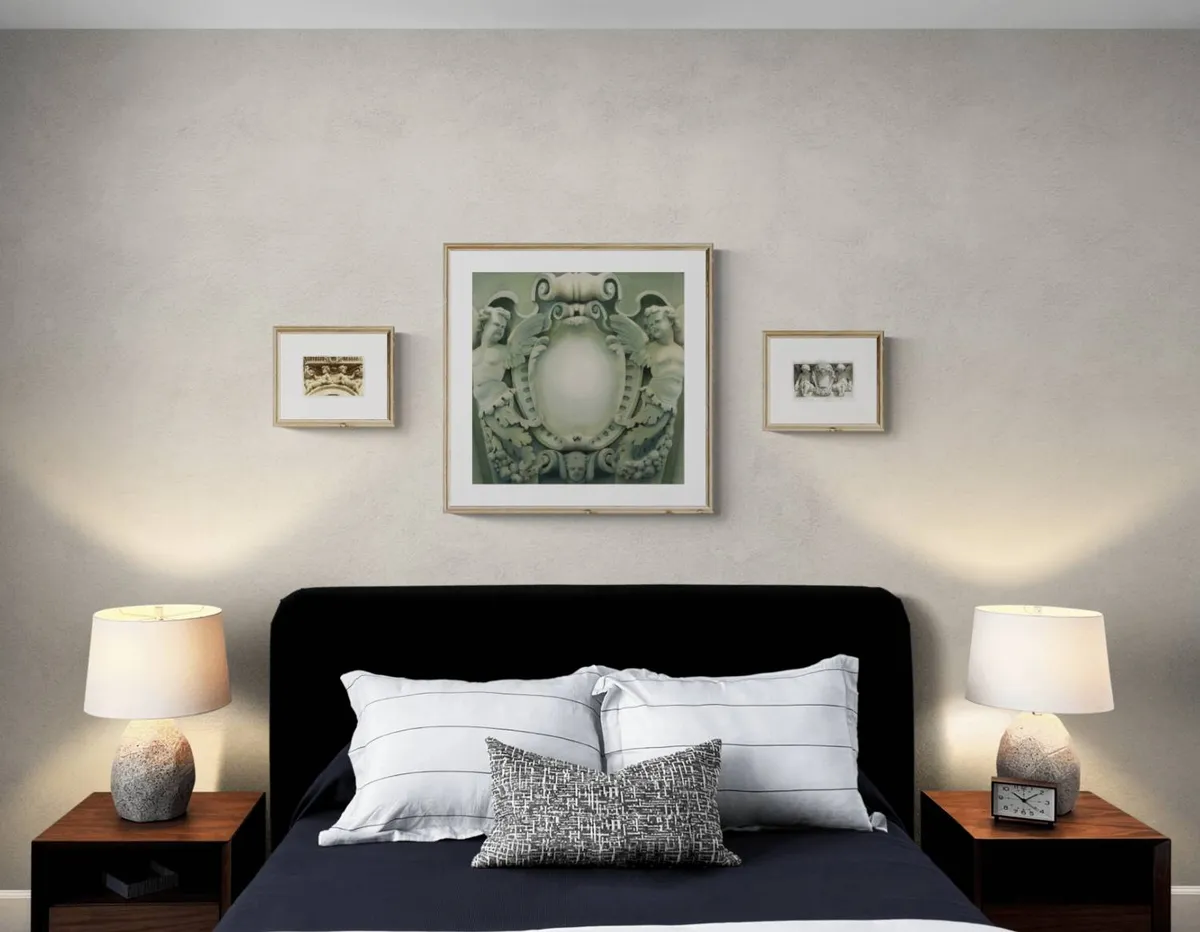
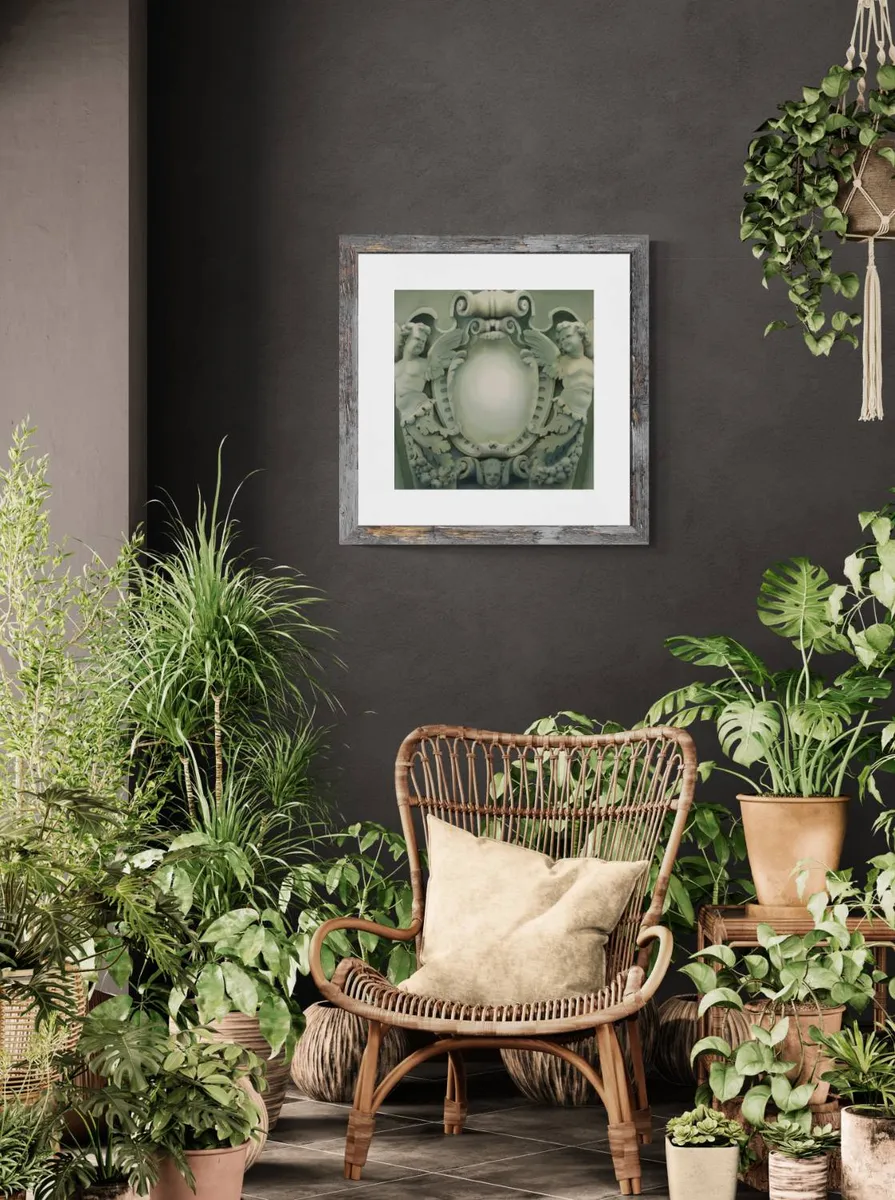
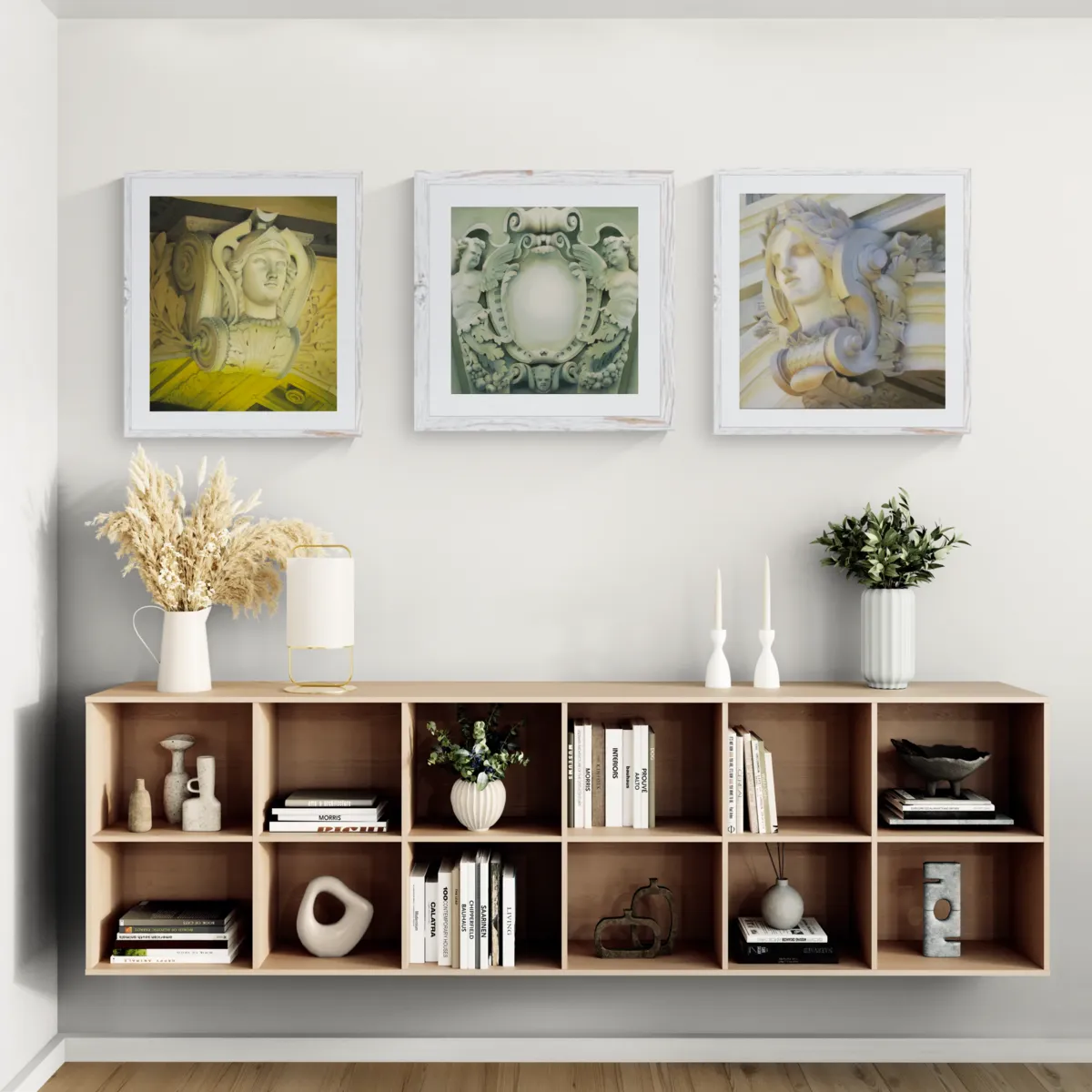
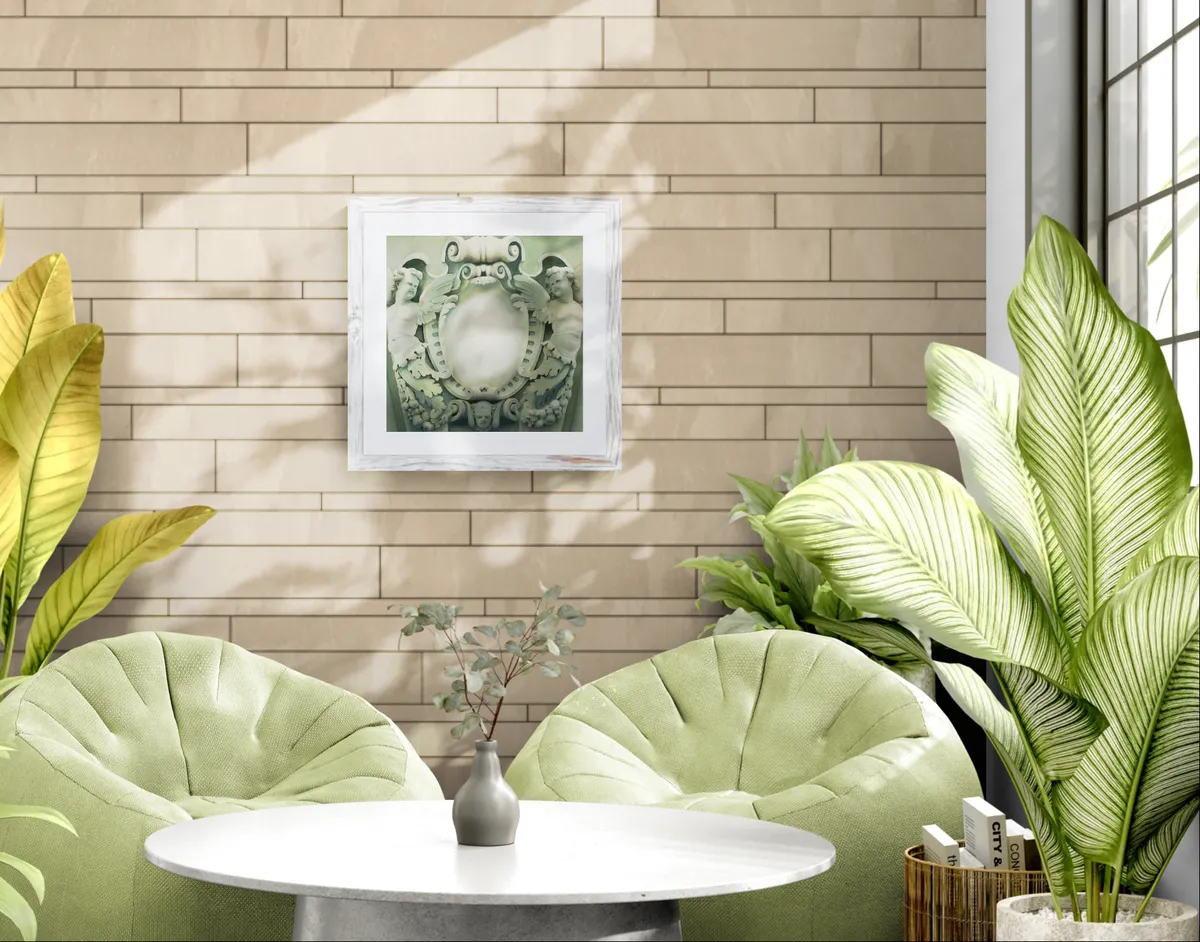
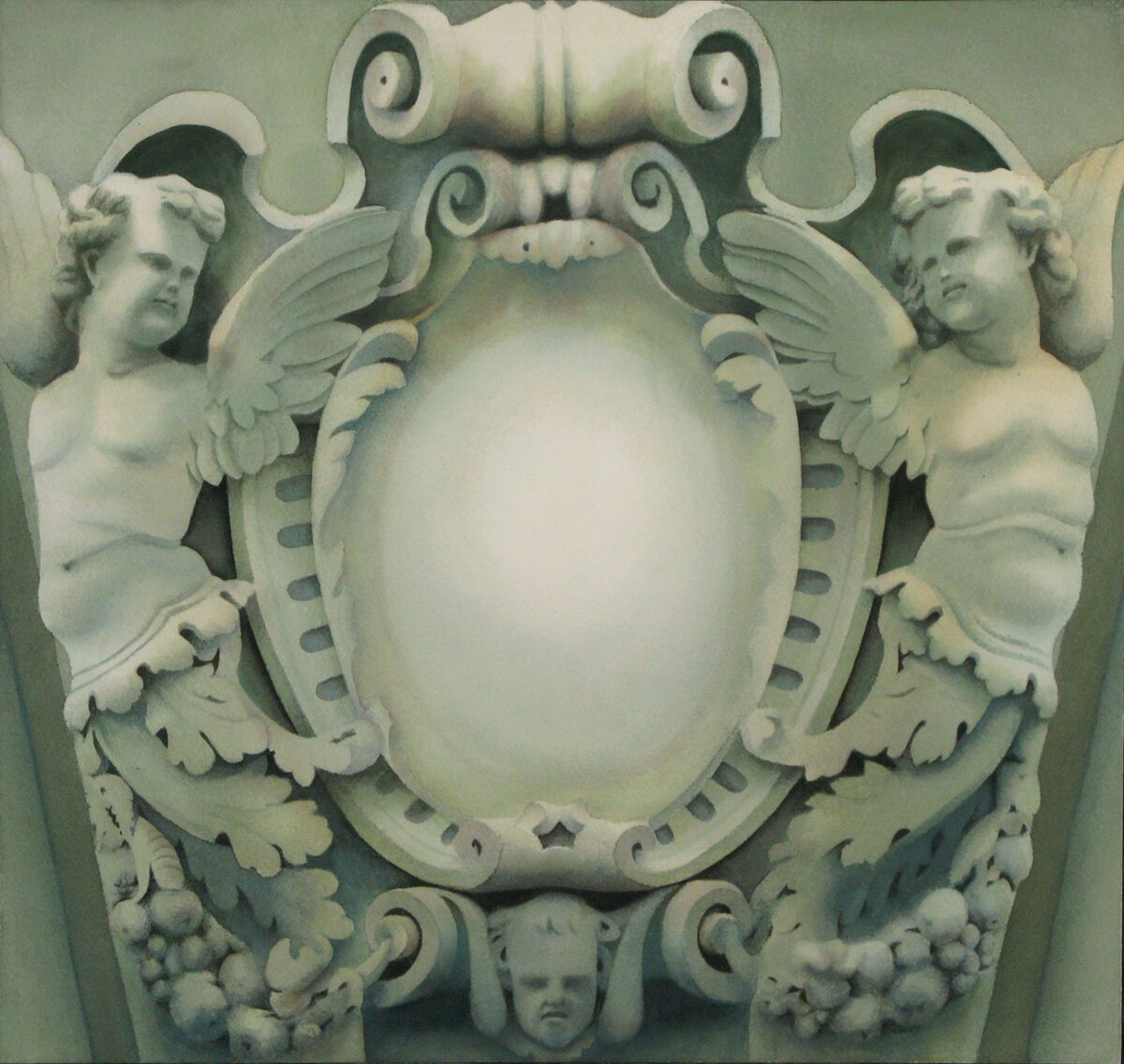
The Belnord
- 20 x 20 undefined
- US dollars
$3,300
US dollars
This watercolor focuses on the carved cartouche above one of the entrances of the Belnord at 225 West 86th Street on Manhattan's Upper West Side. Two winged putti flank an oval shield. The shield is blank. The building was designed by Hiss & Weekes for the Belnord Realty Company and completed in 1909 in brick and Indiana limestone, in the Italian Renaissance style. It fills the entire block between 86th and 87th Streets, Broadway and Amsterdam Avenue. Contemporary press called it the largest apartment house in the world: 175 apartments, more than two thousand rooms, and an expected population of over twelve hundred. Its enormous interior courtyard was also the largest of its kind. The painting holds almost everything within a single range of moss green and gray. The deepest values sit in the niches behind the putti and in the small face below the shield. The palest and smoothest passage is the empty oval at the center, where the light collects. A cartouche is made to carry something: a monogram, a date, a coat of arms, a name. This one carries nothing. The Belnord was designed so residents could drive through monumental entrance gates and cross the private courtyard to their doors, removed from the street outside. Above the entrance they passed through, a shield that names no one. * Framing: Framed; frame not shown * Room view: For scale and presentation only
December, 2010
Watercolor painting
Landmark, Building
- US dollars
$3,300
US dollars