
- US dollars
130 Bowery II
Building in Upper West
- 6 x 4 undefined
$800
US dollars
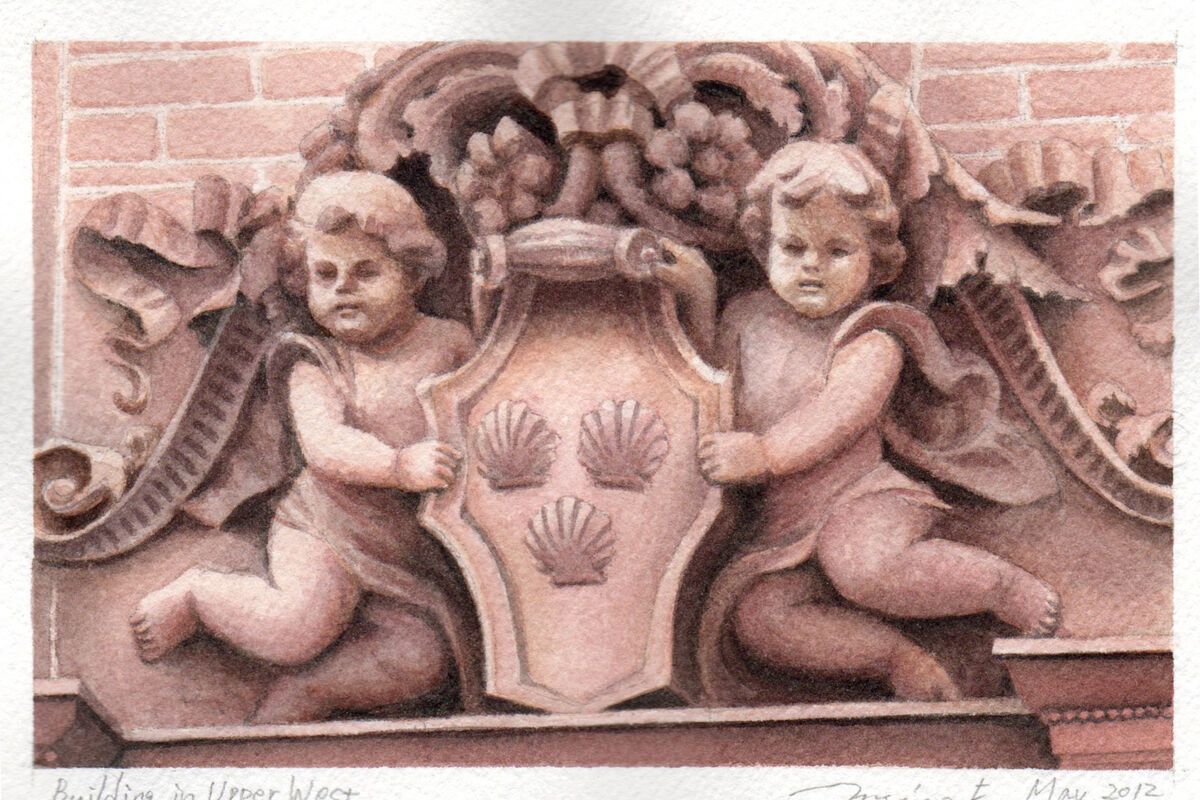
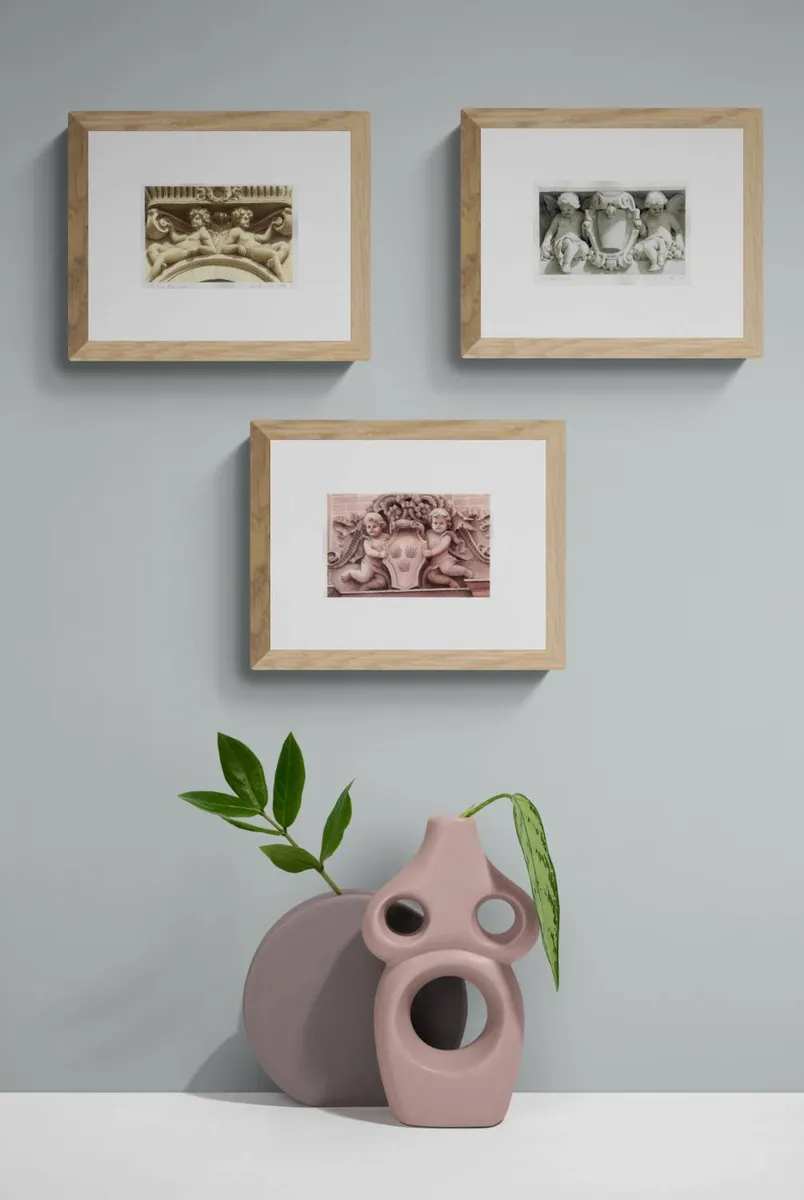
This watercolor focuses on an elaborate architectural relief on a historic building on New York City's Upper West Side. Two cherubs flank a shield bearing three scallop shells, surrounded by scrollwork, foliage, and layered ornamental forms. Layered washes of muted Burnt Sienna, soft red, and weathered grays evoke the patina of aged stone. The transparency of watercolor allows light to move through the surface, suggesting sunlight diffused across the relief and emphasizing its carved depth and texture. Rooted in Beaux-Arts and Renaissance Revival traditions, the ornament reflects the craftsmanship embedded throughout the neighborhood's historic architecture. Isolated from the larger facade, the relief becomes a quiet study of guardianship, history, and beauty enduring within the changing city. * Framing: Framed; frame not shown * Room view: For scale and presentation only
April, 2012
Watercolor painting
Effigy
- US dollars
$800
US dollars
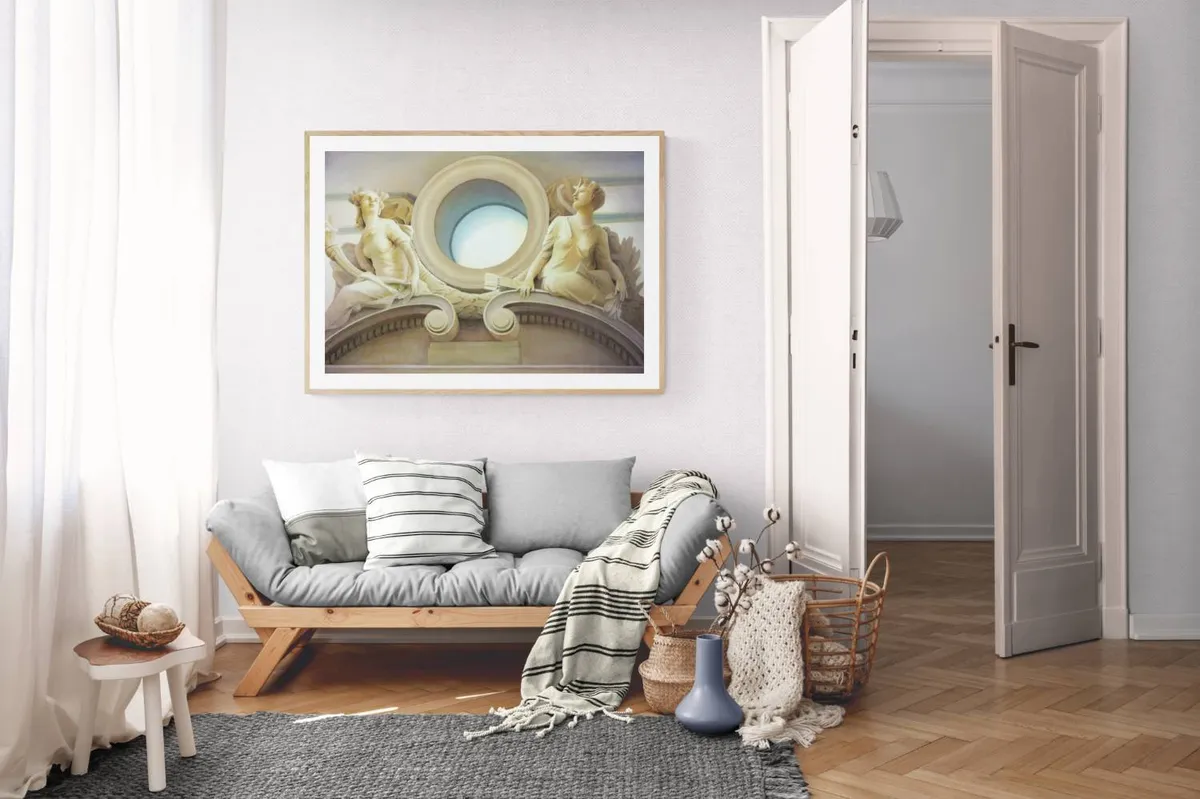
Peninsula Hotel III
- 43 x 30 undefined
- US dollars
$5,000
US dollars
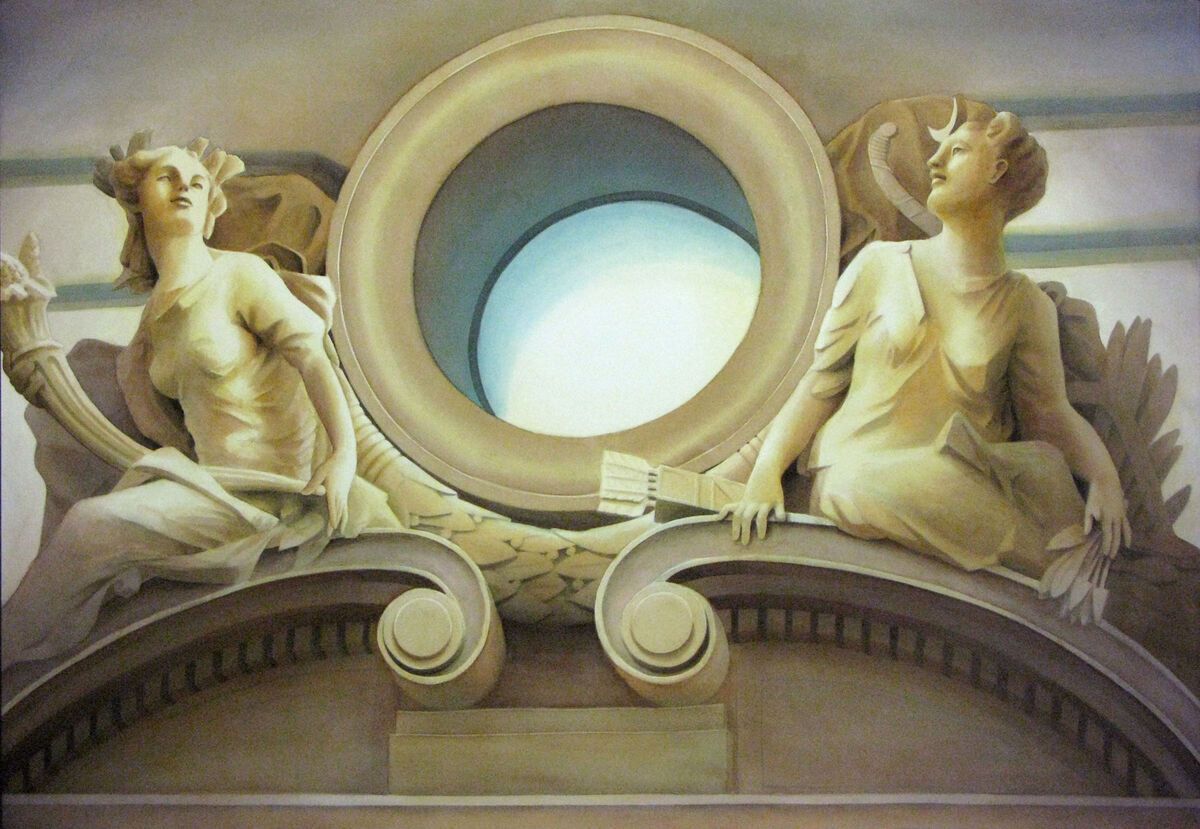
"Peninsula Hotel III" focuses on a pair of sculpted figures flanking the bull's-eye window above the main entrance on West 55th Street in New York City. It is the third in a series painted from this facade, following earlier paintings of the individual figures, and the first to include the circular window, an opening that seems to lead somewhere else. The building opened in 1905 as the Hotel Gotham, designed by Hiss & Weekes, former employees of McKim, Mead & White and faced in limestone to harmonize with McKim's University Club directly to the south. At twenty-three stories, it was among the earliest of the "skyscraper hotels" and one of the first in the city built on a steel frame. The original venture lasted only three years. The Gotham was foreclosed in 1908, having failed to obtain a liquor license. Agriculture and the hunt, provision and plenty, set above the door. The figures are Ceres and Diana. Ceres tips her head back, a cornucopia at her shoulder; Diana wears a crescent moon in her hair and keeps one hand on her bow. Both sit on the outward scrolls of a broken pediment. The painting holds everything in warm cream and ochre except the window, which runs from turquoise to a pale glow at its center. The brightest passage in the picture is the opening itself. * Framing: Framed; frame not shown * Room view: For scale and presentation only
January, 2013
Watercolor painting
Figure, Effigy, Landmark, NYC
- US dollars
$5,000
US dollars
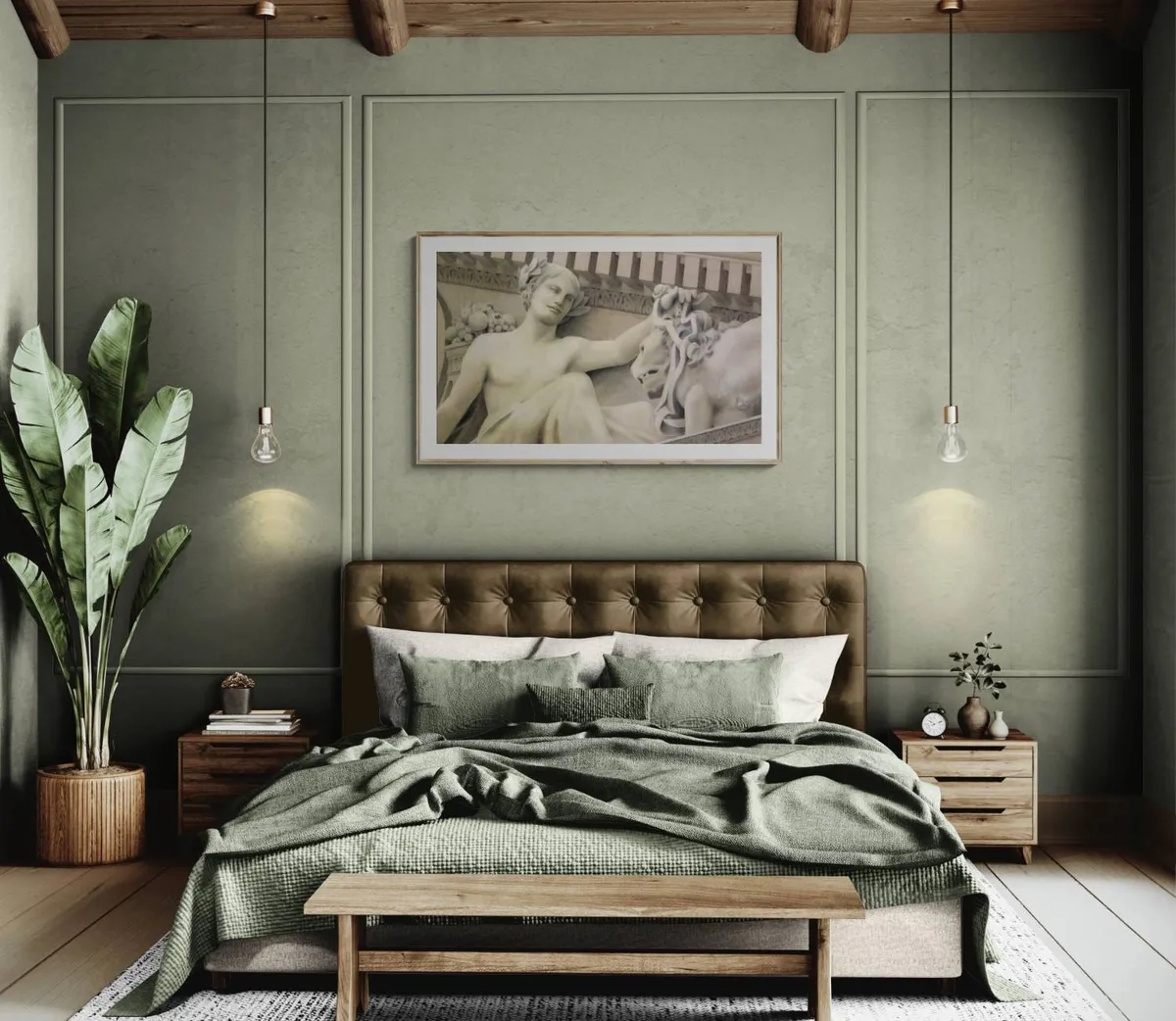
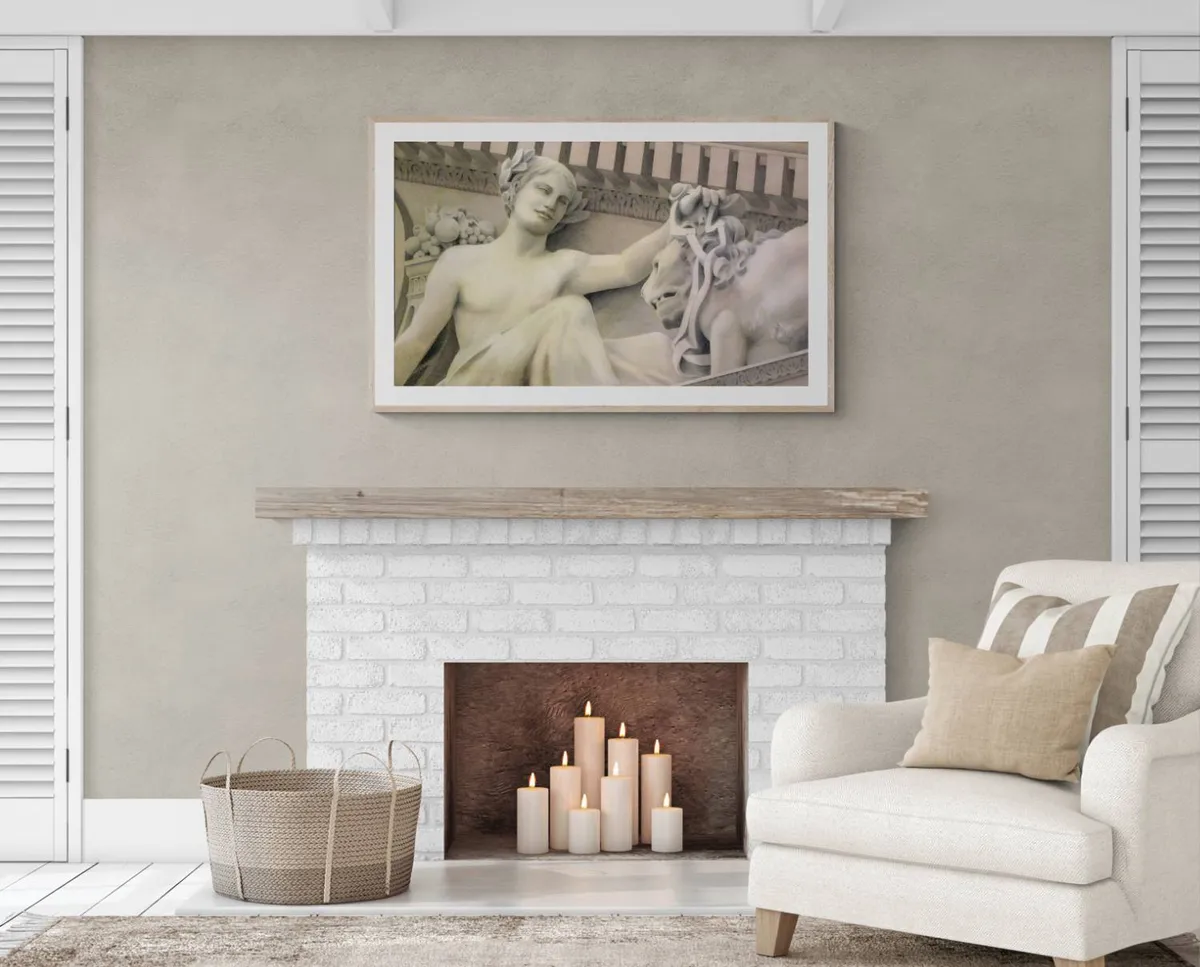
130 Bowery II
- 44 x 26 undefined
- US dollars
$5,000
US dollars
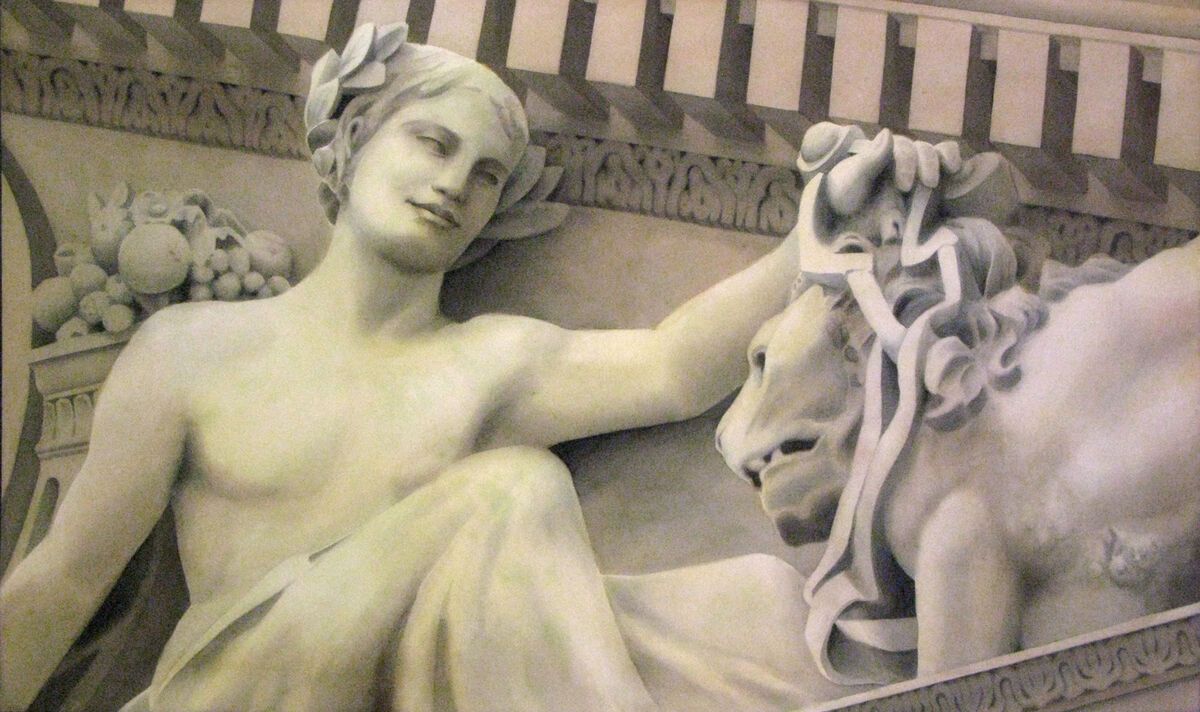
"130 Bowery II" takes the male figure from the pediment of the former Bowery Savings Bank at 130 Bowery, caught in a dynamic pose as he tames a lion. It is one of a pair. The companion painting, "130 Bowery," takes the female figure on the opposite side of the pediment's central clock and is in a private collection. The two sculptures stand for Time and Industry. Stanford White of McKim, Mead & White designed the bank, built between 1893 and 1895. He chose a Roman classical style, a first for an American bank, and it became the standard for bank buildings across the country. The facade carries Corinthian columns and sculpted pediments by Frederic MacMonnies. The Landmarks Preservation Commission's designation report notes that the architects used sculpture wherever they could, and describes the clock as flanked by reclining classical figures and domesticated lions. The Bowery Savings Bank lost its own name in 1992. Since 2002 the building has been an event venue, and the figures have held their positions above the entrance the entire time. * Framing: Framed; frame not shown * Room view: For scale and presentation only
March, 2013
Watercolor painting
Effigy, Figure, Landmark,
- US dollars
$5,000
US dollars