
- US dollars
215 E 10th Street
The Metropolitan Museum of Art
- 20 x 20 undefined
$3,300
US dollars
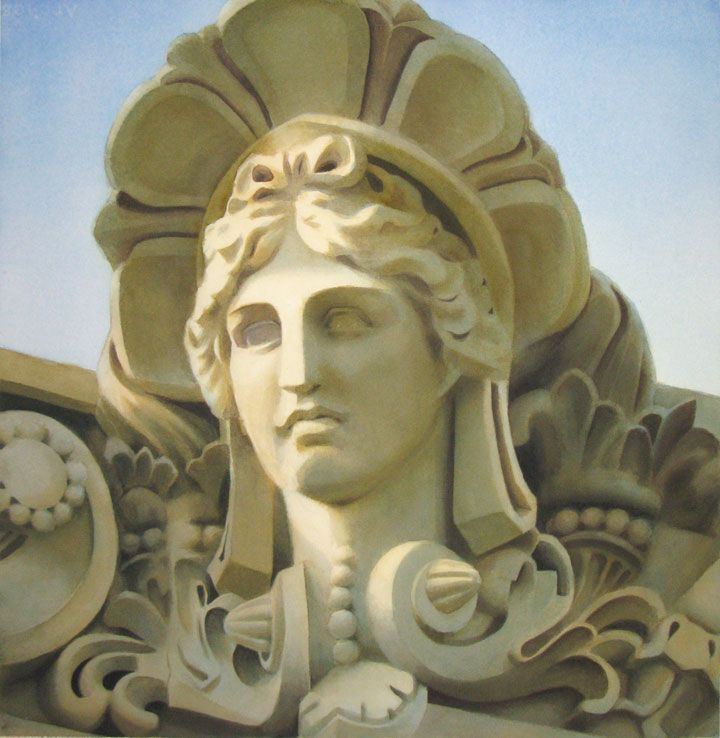
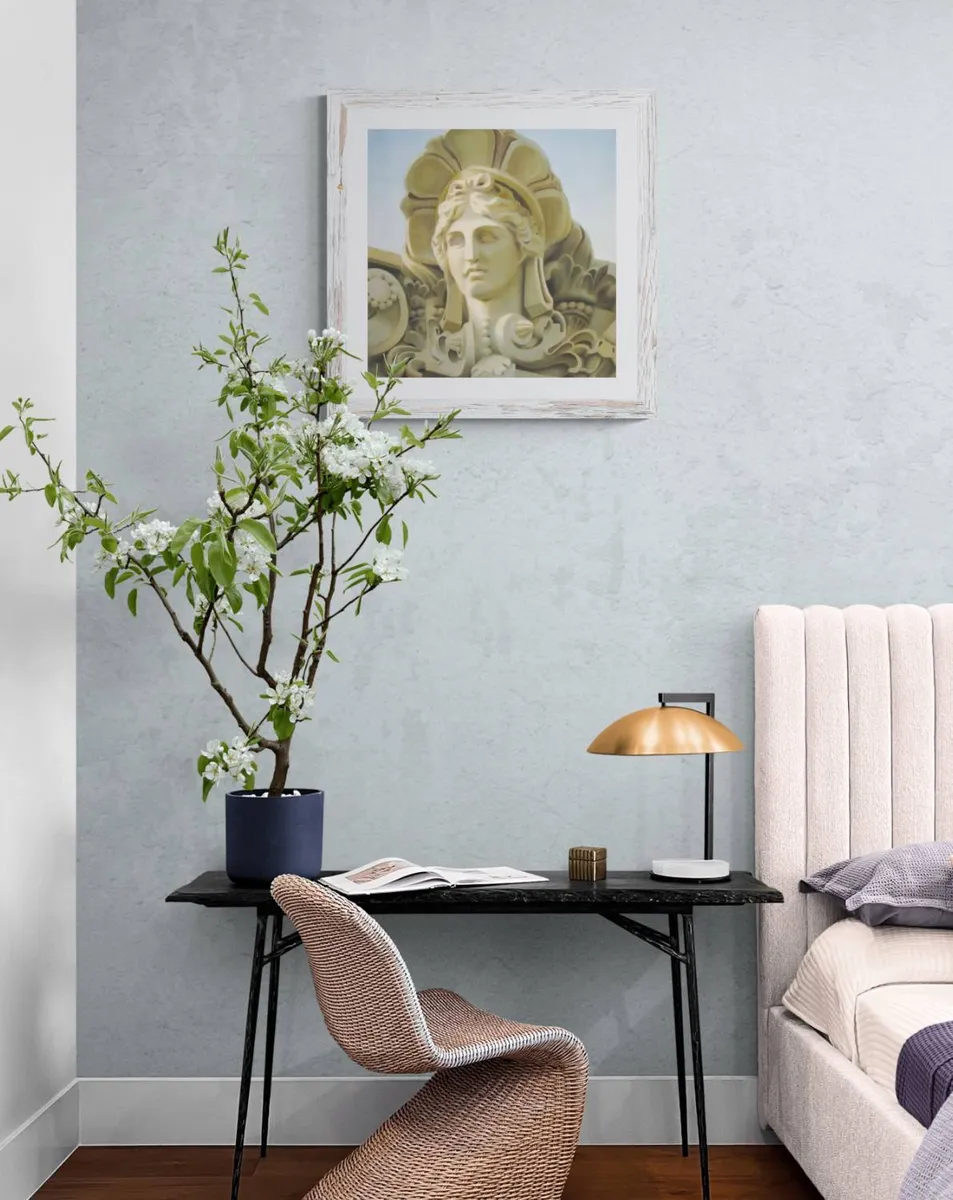
This watercolor focuses on one of the sculpted heads along the roofline of the Metropolitan Museum of Art, on Fifth Avenue in New York City. The Fifth Avenue facade was designed by Richard Morris Hunt, who died in 1895 shortly after completing his plans and never saw it built. His son, Richard Howland Hunt, oversaw the completion of the central entrance block in 1902. Hunt had envisioned the facade in white marble, but Indiana limestone was ultimately used. Seen from the sidewalk far below, the head registers as a pale shape against the open sky. Late-afternoon light moves across it from one side, warming the stone and separating the face from the palmette behind it. The tight framing brings this distant architectural detail into direct view, giving the face a presence of its own. The head recalls the ancient tradition of the antefix — an ornament set along a roofline, often combining a face with a palmette. Greek and Etruscan temples were lined with them, the same face repeated the length of the roof so it could be read from the ground. Several terracotta examples sit in the museum's own galleries. The building carries the same idea along its roofline, in limestone, centuries later. * Framing: Framed; frame not shown * Room view: For scale and presentation only
February, 2011
Watercolor painting
Effigy, Landmark, Building, The Met
- US dollars
$3,300
US dollars
Building in Upper West
- 6 x 4 undefined
- US dollars
$800
US dollars
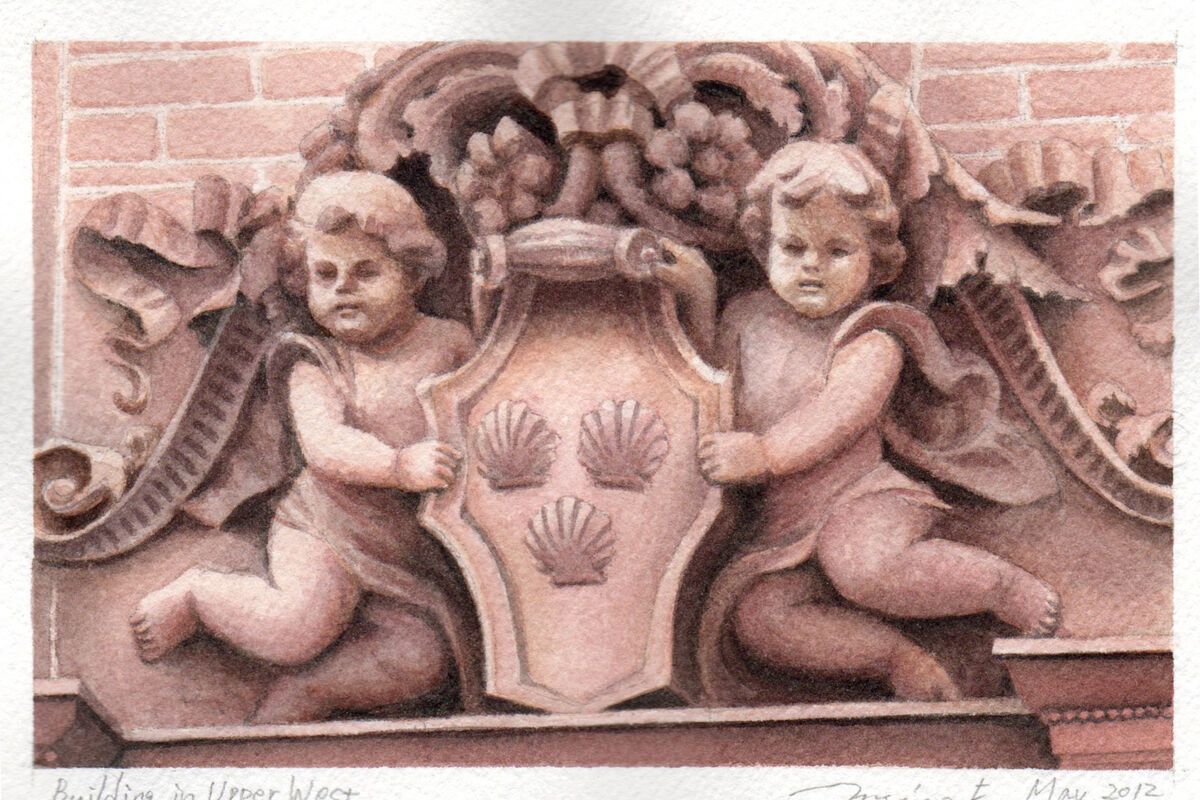
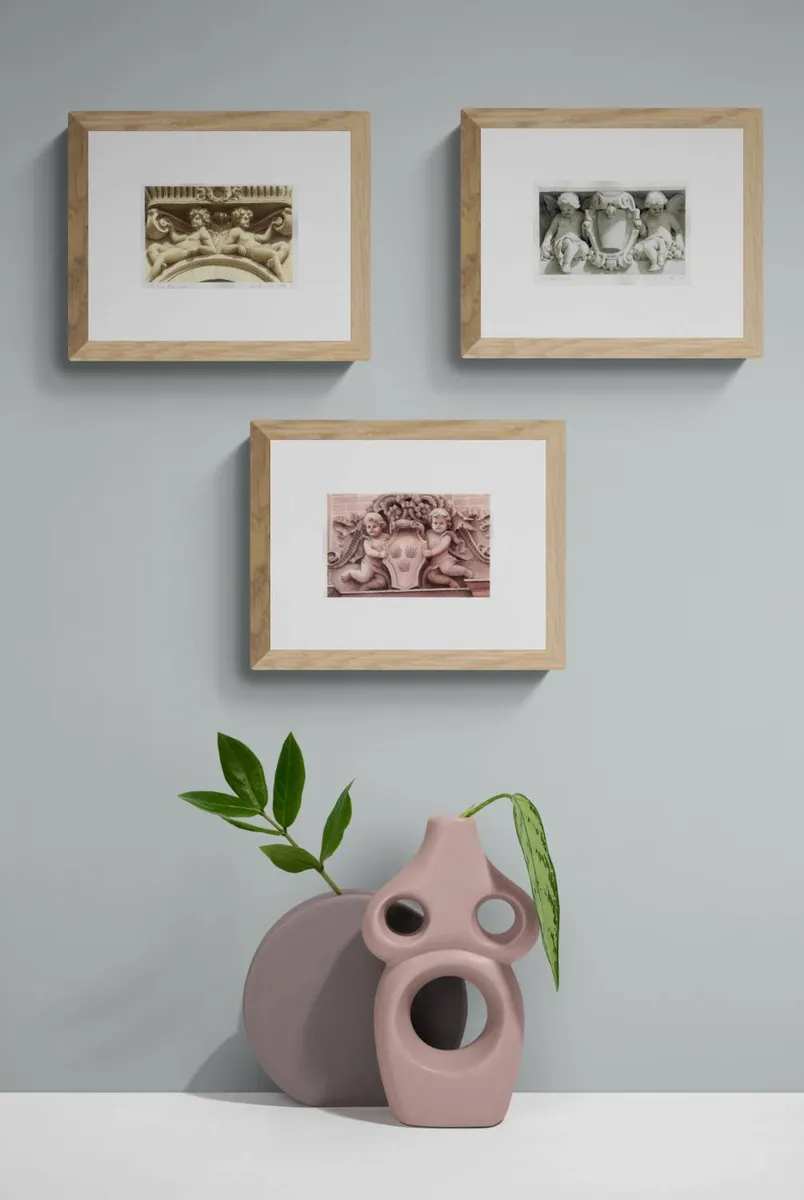
This watercolor focuses on an elaborate architectural relief on a historic building on New York City's Upper West Side. Two cherubs flank a shield bearing three scallop shells, surrounded by scrollwork, foliage, and layered ornamental forms. Layered washes of muted Burnt Sienna, soft red, and weathered grays evoke the patina of aged stone. The transparency of watercolor allows light to move through the surface, suggesting sunlight diffused across the relief and emphasizing its carved depth and texture. Rooted in Beaux-Arts and Renaissance Revival traditions, the ornament reflects the craftsmanship embedded throughout the neighborhood's historic architecture. Isolated from the larger facade, the relief becomes a quiet study of guardianship, history, and beauty enduring within the changing city. * Framing: Framed; frame not shown * Room view: For scale and presentation only
April, 2012
Watercolor painting
Effigy
- US dollars
$800
US dollars
215 E 10th Street
- 6 x 4 undefined
- US dollars
$800
US dollars
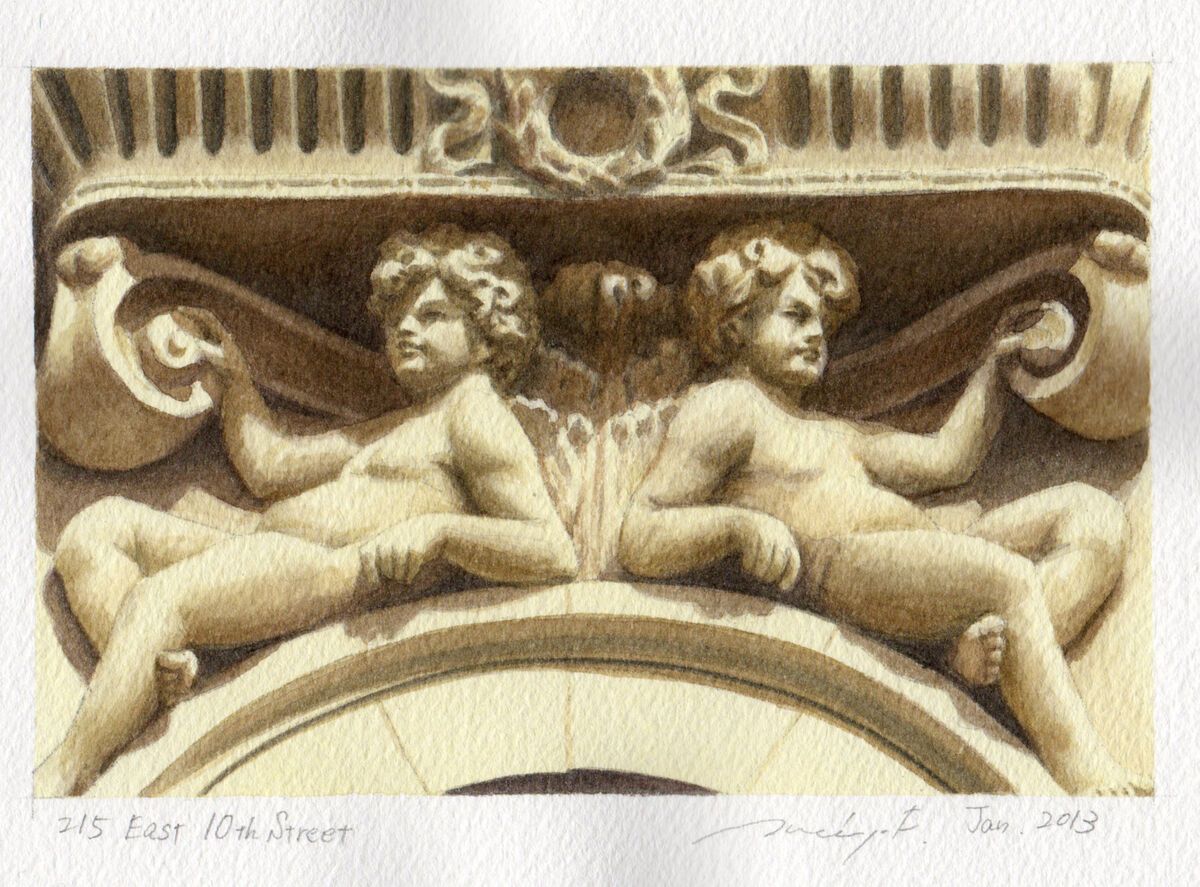
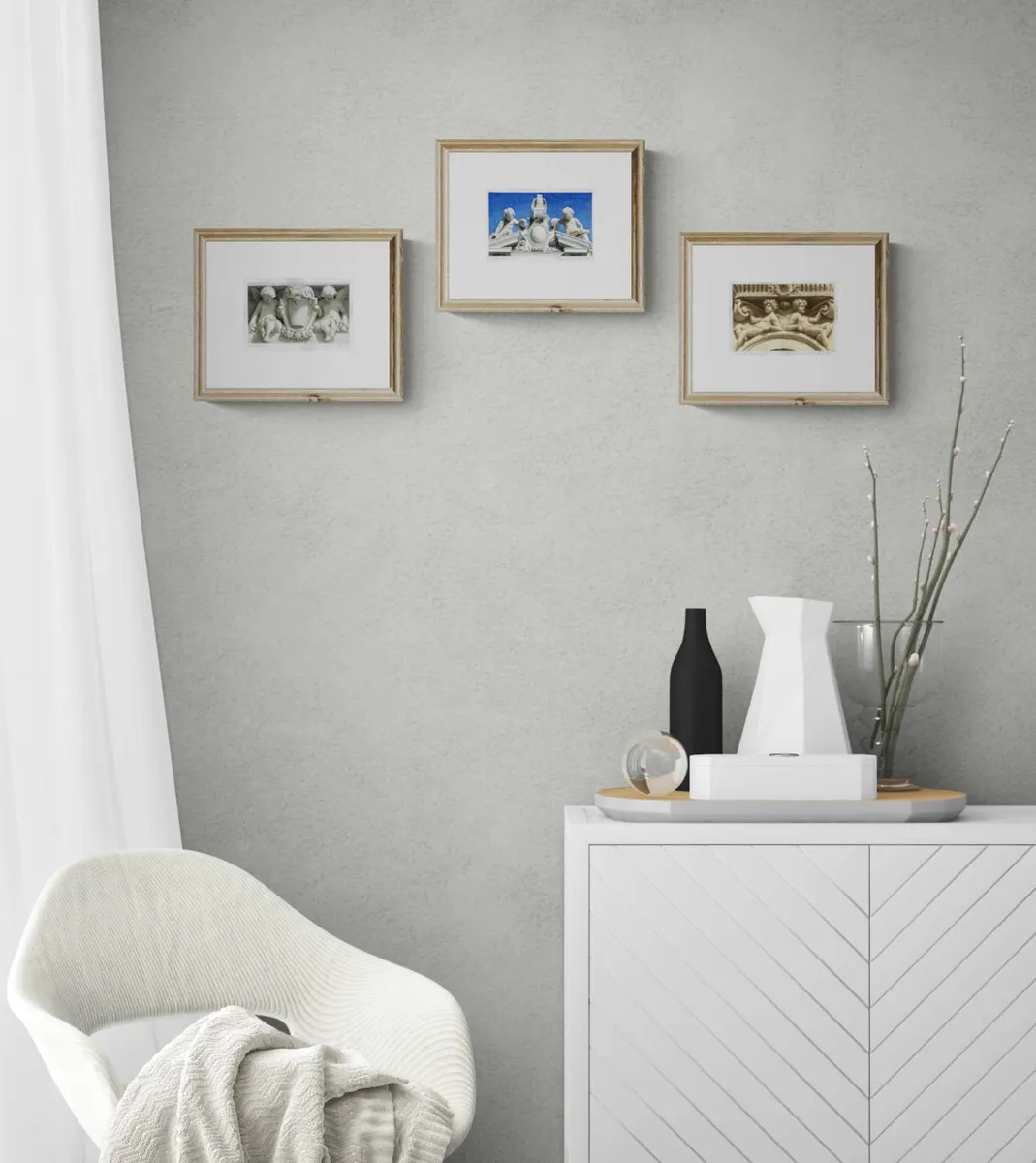
This small watercolor focuses on two cherubs above an arched window at 215 East 10th Street in New York City's East Village. Leaning into one another, the figures have an unexpected tenderness and companionship, caught here in the bright light of a summer day. The building was designed by Charles Rentz in 1891 as one of a group of six-story brick, stone, and terracotta tenements on East 10th Street. Cherubs, or putti, appear abundantly on these facades. The neighborhood was then Kleindeutschland, or Little Germany, which for part of the 19th century held the largest German population anywhere outside Europe. The painting is small — smaller than the carving itself. A detail passed daily without notice, brought close enough to see how the two figures are holding each other up. * Framing: Framed; frame not shown * Room view: For scale and presentation only
January, 2013
Watercolor painting
Effigy. Landmark, figure, Building
- US dollars
$800
US dollars